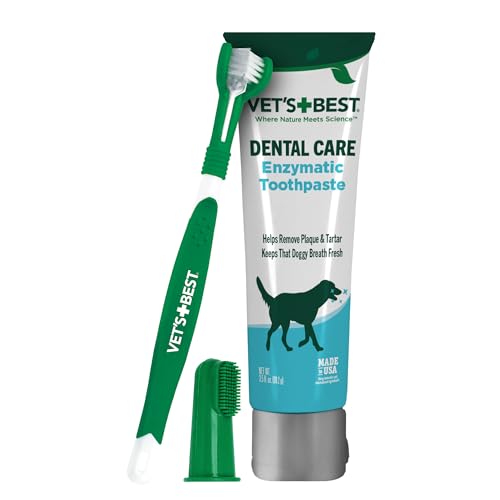
Vet's Best
Vet's Best Dental Care Gel Toothpaste
Enzymatic dental gel for dogs made with aloe, neem oil and baking soda, marketed as not needing brushing.
View on AmazonLast updated: 2026-04-10
How we researched this: we compared the manufacturer's specifications and label claims, published guidance and reported owner experience. We have not tested this product ourselves, and nothing here is veterinary advice. Editorial policy
Strengths
- Marketed as no-brush
- Natural ingredients (maker)
- Enzymatic formula
- Marketed to freshen breath
Drawbacks
- Taste dogs dislike
- Limited effectiveness alone
- Messy application
Vet's Best Dental Care Gel Toothpaste: In-Depth Research
Editorial analysis by the FurReviews team, based on manufacturer specifications, published guidance and reported owner experience. We have not tested this product ourselves.
What a no-brush product can and cannot do
Periodontal disease is the most common health problem in adult dogs, and it is painful long before it looks bad. Plaque forms on teeth within hours, mineralises into tartar within days, and drives gum inflammation and eventually bone loss around the tooth root.
An enzymatic gel or spray works chemically rather than mechanically — enzymes act on the plaque biofilm, and the product is spread by the dog's own licking and tongue movement.
What that can do: reduce plaque formation on accessible tooth surfaces and improve breath, for a dog that will not tolerate a toothbrush.
What it cannot do: reach below the gum line where periodontal disease actually happens, remove tartar that has already mineralised, or match the mechanical disruption that brushing provides.
For a dog that refuses brushing entirely, something is meaningfully better than nothing. That is the honest case for this product.
Brushing remains the intervention with evidence
Daily brushing with a dog-specific toothpaste has the best evidence of anything an owner can do.
Never use human toothpaste. It can contain xylitol, which is toxic to dogs, and fluoride at doses not meant to be swallowed.
Getting there is easier than people expect if you build it over weeks rather than days:
The outer surfaces matter most — that is where plaque accumulates, and dogs' tongues do some of the work on the inner surfaces. You do not need to open the mouth wide.
If you get to daily brushing, a spray or gel becomes an extra rather than the plan.
Look for the VOHC seal
The Veterinary Oral Health Council publishes a list of products that have submitted data showing they meet a defined standard for reducing plaque or tartar. It covers gels, sprays, water additives, chews and diets.
It is the only widely recognised independent check in a category dense with unverified claims, and checking that list before buying anything dental is the most useful filter an owner has. A product on it has evidence; one that simply says "cleans teeth" has a marketing department.
Ingredients worth a note
Enzymatic products commonly use enzyme systems plus botanicals such as aloe, neem and baking soda.
Two practical points:
Using it well
When to see a vet instead
Bad breath is not normal. It is the smell of bacteria and disease.
Signs that need a veterinary dental assessment: visible brown tartar, red or receding gums, reluctance to chew on one side, dropping food, pawing at the mouth, a sudden preference for soft food, or facial swelling.
At that stage disease is below the gum line where nothing topical can reach. Scaling under general anaesthetic is the only way to clean there. Anaesthesia-free dental cleaning does not do it — it removes visible tartar and leaves the actual disease while making the mouth look better, which is the worst combination.
Dental disease is also not purely a mouth problem. There is an established association between periodontal disease and systemic inflammation, which is part of why vets take it seriously rather than treating it as cosmetic.
Who should look elsewhere
If your dog tolerates a toothbrush, brush — it is more effective and cheaper. If there is already visible tartar or bad breath, book a veterinary dental assessment rather than buying another topical. And never use a dog dental product on a cat unless it is specifically labelled for cats.
Vet's Best Dental Care Gel Toothpaste: Common Questions
Do no-brush dental gels actually work?
They reduce plaque formation on accessible surfaces and improve breath through an enzymatic action spread by the dog's own licking. They cannot reach below the gum line where periodontal disease happens, and cannot remove tartar that has already mineralised. For a dog that refuses brushing, something is meaningfully better than nothing.
Is a gel as good as brushing?
No. Daily brushing with a dog-specific toothpaste has the best evidence of anything you can do, because it adds mechanical disruption to the chemical action. Never use human toothpaste — it can contain xylitol, which is toxic to dogs.
How do I get my dog used to tooth brushing?
Over weeks. Let the dog lick the paste off your finger for several days, then rub a finger along the outside of the gum line, then introduce a brush touching only, then brush a few teeth and stop while the dog is comfortable. The outer surfaces matter most, so you do not need to open the mouth wide.
How do I know a dental product has evidence behind it?
Check the Veterinary Oral Health Council's published accepted-products list, which covers gels, sprays, water additives, chews and diets. It is the only widely recognised independent check in a category full of unverified claims.
Can I use a dog dental product on my cat?
Not unless it is specifically labelled for cats. Cats are sensitive to a number of essential oils used in 'natural' formulations, and 'natural' is not a safety claim. Check the label for xylitol on any dental product too.
Where to Buy
As an Amazon Associate, FurReviews earns from qualifying purchases at no extra cost to you.
Similar Products You Might Like

FURminator
FURminator Undercoat Deshedding Tool for Dogs
The manufacturer claims up to 90% less shedding. Stainless steel deShedding edge reaches through topcoat to safely remove loose hair and undercoat.
+ Maker claims up to 90% less shedding
+ Stainless steel edge
- Expensive for a brush
- Can irritate skin if overused

Wahl
Wahl USA Clipper Pet Pro Dog Grooming Kit
Complete home grooming kit with heavy-duty clipper, guide combs, scissors, and carrying case. Low noise motor.
+ Complete kit included
+ Low noise motor
- Not for very thick coats
- Corded only
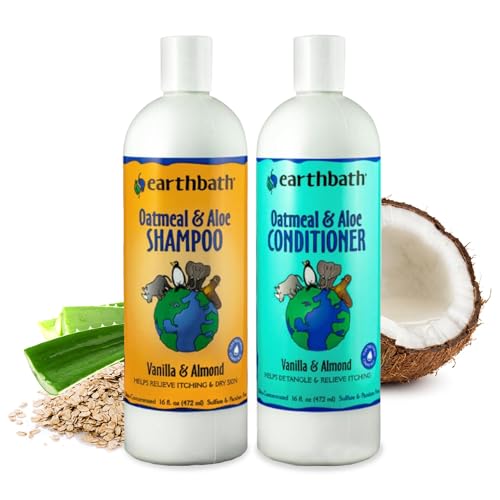
Earthbath
Earthbath Oatmeal & Aloe Pet Shampoo
All-natural pet shampoo with colloidal oatmeal and organic aloe vera. Soap-free, pH balanced, and cruelty-free.
+ All natural ingredients
+ Marketed for sensitive skin
- Thin consistency
- Doesn't lather much
