
Canidae
Canidae PURE Limited Ingredient Salmon & Sweet Potato
Limited ingredient diet with just 8 key ingredients. Marketed for dogs with food sensitivities. Grain-free with real salmon.
View on AmazonLast updated: 2026-04-10
How we researched this: we compared the manufacturer's specifications and label claims, published guidance and reported owner experience. We have not tested this product ourselves, and nothing here is veterinary advice. Editorial policy
Strengths
- Only 8 ingredients
- Real salmon first
- Grain-free
- For sensitive dogs
Drawbacks
- Fishy smell
- Premium price
- May cause loose stool initially
Canidae PURE Limited Ingredient Salmon & Sweet Potato: In-Depth Research
Editorial analysis by the FurReviews team, based on manufacturer specifications, published guidance and reported owner experience. We have not tested this product ourselves.
What a limited-ingredient diet is genuinely for
A limited-ingredient diet contains a short, named ingredient list built around a single animal protein. The point is not that fewer ingredients are inherently healthier — it is that a short list is something you can reason about.
If you are trying to work out what a dog reacts to, a recipe with one protein and one main carbohydrate lets you change one variable at a time. A food with chicken, lamb, salmon and four legumes does not.
The honest limit: this is not a diagnostic tool
A true elimination trial — the process that actually identifies a food allergy — has requirements most owners are surprised by:
This is a veterinary process. Salmon is not novel for most dogs — it is in a great many foods — so a salmon limited-ingredient diet is a reasonable maintenance food for a sensitive dog, and not an allergy test.
Most itchy dogs do not have a food allergy
Worth saying, because owners often reach for food first and lose months.
The most common causes of chronic itching in dogs, roughly in order, are fleas — including flea allergy dermatitis, where a single bite causes days of itching with no fleas visible — and environmental allergy, or atopic dermatitis, which is very common and often seasonal at first. Food allergy is real but is a smaller share.
Mites, including sarcoptic mange, and secondary bacterial or yeast infections that follow scratching, are also common and need specific treatment.
So the order that saves time: rigorous flea control on every animal in the house and on the environment, then a vet visit, then a food trial if the vet thinks it is indicated. Signs that need a vet rather than another bag: hair loss, scabs, a yeasty smell, red or thickened skin, ear infections alongside the itching, or itching that stops the dog sleeping.
Salmon, fish oil and storage
Fish-based foods have a genuine advantage in omega-3 content, which has reasonable evidence behind it for skin and coat and for joint comfort.
They also have a genuine storage weakness. Fish oils oxidise, and oxidised fat both loses its benefit and tastes rancid, which is a common reason a dog goes off a fish food that it previously ate.
Grain-free, and the DCM question
This recipe is grain-free, so the open question applies.
The FDA opened an investigation in 2018 into reports of dilated cardiomyopathy in dogs eating diets high in peas, lentils, other legume seeds or potatoes, including in breeds without a genetic predisposition. Since then the FDA has published updates, has not established a causal link, and has said it has not found a definitive relationship. Research continues, with mixed findings.
If your dog has a heart murmur, a breed predisposition, or you are simply unsure, that is a conversation for your vet about your individual dog. It is also worth knowing that many limited-ingredient diets are available in grain-inclusive versions, which sidesteps the question entirely if that matters to you.
Transitioning
Over seven to ten days, and slower for a dog with a sensitive stomach. If you are running a food trial, the transition is part of the clock — the eight to twelve weeks starts once the dog is fully on the new food.
Who should look elsewhere
If you are genuinely investigating a food allergy, you need a vet-supervised trial with a novel or hydrolysed protein, not a shelf food. If the itching has not been worked up, rule out fleas and see a vet first. And if grain-free is a concern for you, look for the grain-inclusive version of a limited-ingredient recipe.
Sources for health information
- AAFCO — pet food labels and nutrient profiles
- WSAVA Global Nutrition Committee — selecting a pet food
- U.S. FDA Center for Veterinary Medicine — animal food, drugs and safety alerts
- ASPCA Animal Poison Control Center — toxic foods, plants and products
- American Veterinary Medical Association — pet owner resources
Canidae PURE Limited Ingredient Salmon & Sweet Potato: Common Questions
Will a limited-ingredient diet cure my dog's allergies?
It is a sensible maintenance food for a sensitive dog, not a test or a cure. Identifying a food allergy needs a vet-supervised elimination trial using a genuinely novel or hydrolysed protein, strictly nothing else for eight to twelve weeks, and a deliberate re-challenge at the end. Salmon is not novel for most dogs.
My dog is itchy. Is it the food?
Usually not, at least not first. Fleas — including flea allergy dermatitis, where a single bite causes days of itching with no fleas visible — and environmental allergy are far more common than food allergy. Rule out fleas rigorously on every animal and in the house, then see a vet.
Why has my dog gone off its fish-based food?
Often oxidised fat. Fish oils go rancid, which loses the benefit and tastes unpleasant. Keep the food in its sealed original bag inside a container rather than tipped loose into a bin, store it cool and dark, and buy a size you will finish within about a month of opening.
Is grain-free a problem?
It is unresolved. The FDA opened an investigation in 2018 into DCM reports in dogs eating diets high in legumes and potatoes, and has since said it has not established a causal link. Research continues with mixed results. Many limited-ingredient recipes come in a grain-inclusive version if you would rather avoid the question.
How long before I see a difference on a new food?
Skin takes eight to twelve weeks to respond, which is why proper food trials run that long. Digestive changes show up faster. Transition over seven to ten days first, and if you are running a trial, the clock starts once the dog is fully on the new food.
Where to Buy
As an Amazon Associate, FurReviews earns from qualifying purchases at no extra cost to you.
Similar Products You Might Like
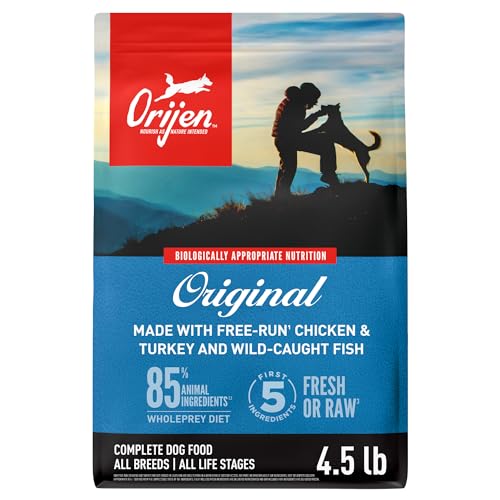
Orijen
Orijen Original Grain-Free Dry Dog Food
Biologically appropriate dog food made with free-run chicken and turkey, wild-caught fish, and cage-free eggs. 85% quality animal ingredients.
+ 85% animal ingredients
+ Grain-free recipe
- Premium price point
- May be too rich for sensitive stomachs

Blue Buffalo
Blue Buffalo Wilderness High Protein Dry Dog Food
High-protein, grain-free recipe inspired by the diet of wolves. Made with real deboned chicken and LifeSource Bits.
+ High protein content
+ LifeSource Bits antioxidants
- Some dogs may have allergies
- Price increased recently

Royal Canin
Royal Canin Size Health Nutrition Medium Adult
Precisely formulated nutrition for medium dogs 23-55 lbs. Marketed for digestive health and stool quality.
+ Size-specific nutrition
+ Sold through veterinary channels
- Contains grains
- Higher price per pound
