
Victor
Victor Hi-Pro Plus Active Dog & Puppy Food
High-protein formula for active dogs and puppies. 88% meat protein with a VPRO blend marketed for digestive and immune health.
View on AmazonLast updated: 2026-04-10
How we researched this: we compared the manufacturer's specifications and label claims, published guidance and reported owner experience. We have not tested this product ourselves, and nothing here is veterinary advice. Editorial policy
Strengths
- 88% meat protein
- VPRO probiotic blend
- All life stages
- Great value for premium
Drawbacks
- Not for sedentary dogs
- Only one protein source
- Strong smell
Victor Hi-Pro Plus Active Dog & Puppy Food: In-Depth Research
Editorial analysis by the FurReviews team, based on manufacturer specifications, published guidance and reported owner experience. We have not tested this product ourselves.
What "88% meat protein" is measuring
That figure does not mean the food is 88% meat. It means roughly 88% of the protein content comes from animal sources rather than from plant ingredients.
That is a meaningful distinction and it is a better number to publish than most. Plant ingredients contribute protein too — peas, lentils and potato protein are all used to raise a guaranteed analysis figure cheaply — so a food can show high crude protein on the label with a substantial share of it coming from plants.
The practical relevance is amino acid profile and digestibility: animal protein sources generally deliver a more complete amino acid profile for a dog than plant sources at the same crude protein level.
It is still a manufacturer-stated formulation figure rather than an independently verified one, and it is not the same as the food being mostly meat by weight.
Who a high-protein active formula is actually for
This is a high-protein, high-calorie formula, and matching it to the dog matters.
Suits: genuine working dogs — sporting, hunting, herding, sled and protection dogs in active season — and dogs with unusually high energy demands.
Does not suit: a pet dog that gets an hour's walk a day. "Active" in pet food marketing and "active" in the sense a formula is designed for are not the same thing. Feeding a working-dog formula to a companion dog, at the volume the dog wants, is a straightforward route to obesity.
Requires care: dogs with a history of pancreatitis, or on fat-restricted diets. Do not switch to a high-fat food without your vet.
The all-life-stages question
A formula labelled for growth as well as adult maintenance is convenient in a multi-dog household. There is one important qualification.
For large-breed puppies, the AAFCO statement needs to cover growth of large-size dogs specifically, because controlled calcium matters for developing joints. Overfeeding a large or giant breed puppy and getting the calcium balance wrong is associated with developmental orthopaedic disease.
Check that wording on the bag rather than assuming "all life stages" covers it. If it does not, a large-breed puppy needs a different food.
Portioning a calorie-dense food
This is where high-performance foods go wrong in pet homes.
Calorie density is high, so the correct portion looks small. Feeding the volume you fed of a standard food will put weight on the dog quickly.
Feed to body condition: ribs easy to feel with flat hands and light pressure, a waist visible from above, a belly that tucks up from the side. Adjust monthly, and weigh the dog on the same scales.
Weigh the food rather than scooping it. Kibble density varies by more than a third between foods, so the same cup holds different calories after a switch.
Treats, chews and training rewards stay under about ten per cent of daily calories and come out of the day's total.
Working dogs and bloat
Worth stating because it applies most to the dogs this food targets.
Gastric dilatation-volvulus — bloat — is a surgical emergency, most associated with large, deep-chested breeds. Known risk factors discussed in the veterinary literature include eating rapidly, a single large daily meal, and eating from a raised bowl in some studies.
Practical measures for a deep-chested dog: split the daily ration into two or more meals, use a slow-feeder bowl if the dog bolts, and avoid strenuous exercise immediately before and after eating.
Know the signs: unproductive retching, a distended hard abdomen, restlessness and drooling. That is an immediate emergency — bloat kills within hours.
The questions worth asking any manufacturer
Ask those of this brand and of anything you compare it against.
Transitioning
Ten to fourteen days for a rich food rather than seven, and hold at the current ratio for a few days if stools loosen. A high-fat food introduced quickly is a common cause of digestive upset.
Who should look elsewhere
If your dog is a pet with ordinary exercise, a standard adult maintenance food is the right product. If your dog has a pancreatitis history or needs fat restriction, talk to your vet first. And if you have a large-breed puppy, check the AAFCO statement covers growth of large-size dogs before feeding it.
Sources for health information
- AAFCO — pet food labels and nutrient profiles
- WSAVA Global Nutrition Committee — selecting a pet food
- U.S. FDA Center for Veterinary Medicine — animal food, drugs and safety alerts
- ASPCA Animal Poison Control Center — toxic foods, plants and products
- American Veterinary Medical Association — pet owner resources
Victor Hi-Pro Plus Active Dog & Puppy Food: Common Questions
What does '88% meat protein' mean?
That roughly 88% of the protein content comes from animal sources rather than plant ingredients — not that the food is 88% meat. It matters because peas, lentils and potato protein can raise a crude protein figure cheaply, and animal sources generally deliver a more complete amino acid profile at the same level.
Is a high-protein active formula right for my dog?
Only if the dog genuinely works. These formulas are built for sporting, hunting, herding and sled dogs in active season. A pet dog getting an hour's walk a day fed a working-dog formula at the volume it wants will gain weight — 'active' in marketing and 'active' in formulation terms are different things.
Can puppies eat it?
Check the AAFCO statement. A formula covering growth as well as adult maintenance is fine for most puppies, but a large-breed puppy needs a statement that specifically covers growth of large-size dogs, because controlled calcium matters for developing joints.
How much should I feed?
Less than you think. Calorie density is high, so the correct portion looks small and feeding the volume you fed of a standard food will put weight on quickly. Feed to body condition, weigh the food rather than scooping it, and weigh the dog monthly on the same scales.
What should I know about bloat in a big working dog?
It is a surgical emergency most associated with large deep-chested breeds, and known risk factors include eating rapidly and a single large daily meal. Split the ration into two or more meals, use a slow feeder if the dog bolts, and avoid strenuous exercise right before and after eating. Unproductive retching with a distended hard abdomen means go now.
Where to Buy
As an Amazon Associate, FurReviews earns from qualifying purchases at no extra cost to you.
Similar Products You Might Like
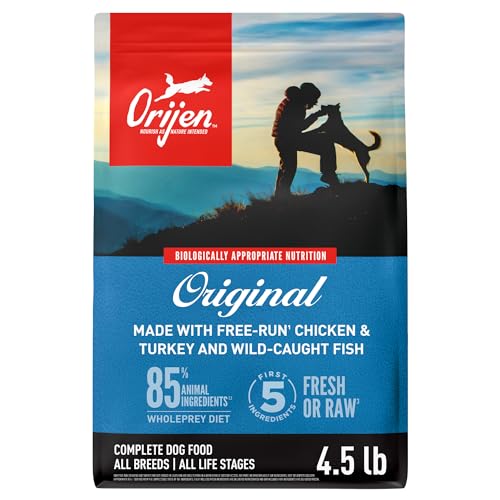
Orijen
Orijen Original Grain-Free Dry Dog Food
Biologically appropriate dog food made with free-run chicken and turkey, wild-caught fish, and cage-free eggs. 85% quality animal ingredients.
+ 85% animal ingredients
+ Grain-free recipe
- Premium price point
- May be too rich for sensitive stomachs

Blue Buffalo
Blue Buffalo Wilderness High Protein Dry Dog Food
High-protein, grain-free recipe inspired by the diet of wolves. Made with real deboned chicken and LifeSource Bits.
+ High protein content
+ LifeSource Bits antioxidants
- Some dogs may have allergies
- Price increased recently

Royal Canin
Royal Canin Size Health Nutrition Medium Adult
Precisely formulated nutrition for medium dogs 23-55 lbs. Marketed for digestive health and stool quality.
+ Size-specific nutrition
+ Sold through veterinary channels
- Contains grains
- Higher price per pound
