
Taste of the Wild
Taste of the Wild High Prairie Grain-Free
Grain-free formula with roasted bison and venison. Supplemented with fruits and vegetables for antioxidants.
View on AmazonLast updated: 2026-04-05
How we researched this: we compared the manufacturer's specifications and label claims, published guidance and reported owner experience. We have not tested this product ourselves, and nothing here is veterinary advice. Editorial policy
Strengths
- Novel protein sources
- Grain-free
- Added probiotics
- Great price for quality
Drawbacks
- Strong gamey smell
- May cause loose stools initially
- Limited availability
Taste of the Wild High Prairie Grain-Free: In-Depth Research
Editorial analysis by the FurReviews team, based on manufacturer specifications, published guidance and reported owner experience. We have not tested this product ourselves.
Novel proteins, and what "novel" actually means
Bison and venison are marketed as novel proteins, and the term has a specific technical meaning that is worth getting right.
A protein is novel for a particular dog if that dog has never eaten it. That is the entire point: an immune system cannot react to something it has never been exposed to. Novelty is not a property of the ingredient, it is a property of the dog's history.
This matters practically. Bison and venison used to be genuinely novel for most dogs. They now appear in a great many commercial foods, which means many dogs have already been exposed — and a protein your dog has eaten before is not novel for it, however exotic it sounds.
If you are working through a suspected food allergy with your vet, the two reliable routes are a protein you can verify the dog has never eaten, or a hydrolysed diet where the proteins are broken into fragments too small to trigger a reaction. And a food trial means eight to twelve weeks with strictly nothing else — no treats, no table food, no flavoured medication — followed by a deliberate re-challenge.
That is a veterinary process. A shelf food with an unusual protein is a reasonable maintenance choice for a sensitive dog and is not a test.
Most itchy dogs do not have a food allergy
Worth saying plainly, because owners often change food first and lose months.
The most common causes of chronic itching in dogs are fleas — including flea allergy dermatitis, where a single bite triggers days of itching with no fleas visible — and environmental allergy, or atopic dermatitis, which is very common and frequently seasonal at first. Food allergy is real and is a smaller share.
Mites, including sarcoptic mange, and secondary bacterial or yeast infections that follow scratching, are also common and need specific treatment.
The order that saves time: rigorous flea control on every animal and on the environment, then a vet visit, then a food trial if the vet thinks it is indicated.
Grain-free, and the DCM question stated accurately
This is a grain-free recipe, so the open question applies.
In 2018 the FDA opened an investigation into reports of dilated cardiomyopathy in dogs eating diets high in peas, lentils, other legume seeds or potatoes, including in breeds without a genetic predisposition. Since then the FDA has published updates, has not established a causal link, and has said it has not found a definitive relationship. Research continues and findings have been mixed.
The honest position is unresolved — not a proven danger and not a debunked scare. If your dog has a heart murmur, a breed predisposition, or you are simply unsure, discuss it with your vet about your individual dog rather than deciding from a headline.
It is also worth knowing grain-free does not mean low-carbohydrate. Kibble needs starch to hold together, so grain is replaced with legumes or potato and total carbohydrate is often similar.
The questions worth asking any brand
Price and ingredient romance are not evidence. Ask:
A brand that answers these directly is telling you something useful. Sourcing photography is not an answer.
Practical notes
Richer foods often cause looser stools if introduced too fast. Transition over ten to fourteen days rather than seven, and hold if stools loosen.
Feed to body condition rather than to the bag, and weigh the food rather than scooping it.
Who should look elsewhere
If you are genuinely investigating a food allergy, you need a vet-supervised trial with a verified novel or hydrolysed protein. If grain-free concerns you, many brands offer grain-inclusive recipes with the same animal content. And if the itching has not been worked up, rule out fleas and see a vet before changing bags again.
Sources for health information
- AAFCO — pet food labels and nutrient profiles
- WSAVA Global Nutrition Committee — selecting a pet food
- U.S. FDA Center for Veterinary Medicine — animal food, drugs and safety alerts
- ASPCA Animal Poison Control Center — toxic foods, plants and products
- American Veterinary Medical Association — pet owner resources
Taste of the Wild High Prairie Grain-Free: Common Questions
What is a novel protein?
One your particular dog has never eaten, because an immune system cannot react to something it has not been exposed to. Novelty is a property of the dog's history, not of the ingredient. Bison and venison were once genuinely novel and now appear in many foods, so many dogs have already been exposed.
Will this food fix my dog's allergies?
It is a reasonable maintenance food for a sensitive dog, not a test or a cure. Identifying a food allergy needs a vet-supervised trial with a verified novel or hydrolysed protein, strictly nothing else for eight to twelve weeks, and a deliberate re-challenge at the end.
Is grain-free food safe?
It is unresolved. The FDA opened an investigation in 2018 into DCM reports in dogs eating diets high in legumes and potatoes and has since said it has not established a causal link, with research continuing. If your dog has a heart murmur or a breed predisposition, discuss it with your vet rather than deciding from a headline.
Is grain-free lower in carbohydrate?
Usually not. Kibble needs starch to hold its shape through extrusion, so removing grain means replacing it with peas, lentils, chickpeas or potato. Total carbohydrate is often similar to a grain-inclusive food.
My dog is itchy. Should I change food first?
Usually not first. Fleas — including flea allergy dermatitis, where one bite causes days of itching with no fleas visible — and environmental allergy are far more common than food allergy. Rule out fleas rigorously on every animal and in the house, then see a vet.
Where to Buy
As an Amazon Associate, FurReviews earns from qualifying purchases at no extra cost to you.
Similar Products You Might Like
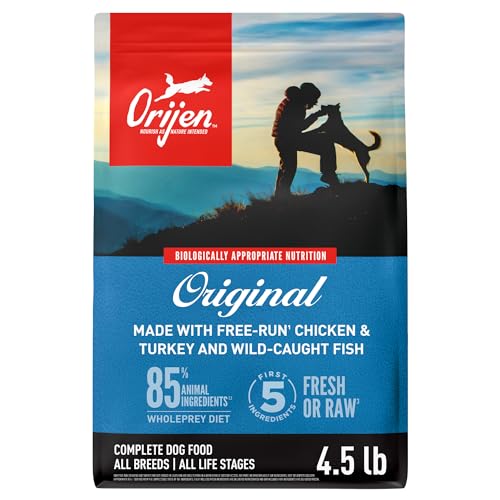
Orijen
Orijen Original Grain-Free Dry Dog Food
Biologically appropriate dog food made with free-run chicken and turkey, wild-caught fish, and cage-free eggs. 85% quality animal ingredients.
+ 85% animal ingredients
+ Grain-free recipe
- Premium price point
- May be too rich for sensitive stomachs

Blue Buffalo
Blue Buffalo Wilderness High Protein Dry Dog Food
High-protein, grain-free recipe inspired by the diet of wolves. Made with real deboned chicken and LifeSource Bits.
+ High protein content
+ LifeSource Bits antioxidants
- Some dogs may have allergies
- Price increased recently

Royal Canin
Royal Canin Size Health Nutrition Medium Adult
Precisely formulated nutrition for medium dogs 23-55 lbs. Marketed for digestive health and stool quality.
+ Size-specific nutrition
+ Sold through veterinary channels
- Contains grains
- Higher price per pound
