Royal Canin
Royal Canin Size Health Nutrition Medium Adult
Precisely formulated nutrition for medium dogs 23-55 lbs. Marketed for digestive health and stool quality.
View on AmazonLast updated: 2026-03-15
How we researched this: we compared the manufacturer's specifications and label claims, published guidance and reported owner experience. We have not tested this product ourselves, and nothing here is veterinary advice. Editorial policy
Strengths
- Size-specific nutrition
- Sold through veterinary channels
- Marketed as highly digestible
- Marketed for skin & coat
Drawbacks
- Contains grains
- Higher price per pound
- Contains by-products
Royal Canin Size Health Nutrition Medium Adult: In-Depth Research
Editorial analysis by the FurReviews team, based on manufacturer specifications, published guidance and reported owner experience. We have not tested this product ourselves.
Why size-specific formulas exist
Sizing dog food by breed size is not marketing dressing. Dogs of different sizes genuinely differ in ways that affect a diet:
A medium-breed adult formula sits between those extremes and targets a weight band rather than a breed.
"Optimal stool quality" is a real formulation goal
It sounds like an odd thing to advertise and it is one of the more honest claims in pet food, because it is measurable.
Stool quality is a direct readout of digestibility. A highly digestible food produces smaller, firmer stools because more of the food is absorbed rather than passed. Manufacturers that run feeding trials measure it, and it is one of the few outcomes an owner can verify at home within a fortnight.
If you switch foods and stools become smaller and firmer, that is a genuine signal. If they become loose and stay loose past the transition period, that food does not suit that dog.
The questions worth asking any manufacturer
Veterinary nutrition guidelines point owners at the company rather than the ingredient list:
Established manufacturers answer yes to more of those than most boutique brands, and that is the reason veterinary recommendation patterns look the way they do. You can ask the same questions of whatever you are comparing this against.
Reading the label properly
The AAFCO nutritional adequacy statement is the most useful sentence on the bag: which life stage the food is complete and balanced for, and whether that was established by formulation or by feeding trials. Feeding trials are the stronger evidence.
Ingredient lists are ordered by weight before cooking. Fresh meat is roughly three-quarters water, most of it driven off during extrusion, so a fresh meat listed first contributes less to the finished kibble than its position implies. This is why ingredient order is a poor comparison tool.
Portion by weight, adjust by condition
Bag guidelines are population averages across a weight band and tend to be generous.
Feed to body condition: ribs easy to feel with flat hands and light pressure, a waist visible from above, a belly that tucks up from the side. Adjust the portion monthly.
Weigh the food rather than scooping it. Kibble density varies by more than a third between foods, so the same cup holds different calories after a switch — which is how dogs gain weight on an unchanged routine.
Treats, chews and training rewards should stay under about ten per cent of daily calories, and come out of the day's total rather than on top.
Transitioning
Seven to ten days, increasing the proportion gradually. If stools loosen, hold at the current ratio for a few days rather than pushing on.
Who should look elsewhere
If your dog has a diagnosed condition, a therapeutic diet from your vet is a different product and no over-the-counter food substitutes. If you are investigating a suspected food allergy, you need a limited-ingredient or hydrolysed diet chosen with your vet. And if your dog is simply overweight, portion control on the current food usually does more than a new bag.
Sources for health information
- AAFCO — pet food labels and nutrient profiles
- WSAVA Global Nutrition Committee — selecting a pet food
- U.S. FDA Center for Veterinary Medicine — animal food, drugs and safety alerts
- ASPCA Animal Poison Control Center — toxic foods, plants and products
- American Veterinary Medical Association — pet owner resources
Royal Canin Size Health Nutrition Medium Adult: Common Questions
Do size-specific dog foods actually matter?
The differences are real. Small dogs burn more calories per kilogram, large dogs have longer digestive transit and are more prone to loose stools, and kibble shape affects whether a dog chews or inhales. It is a defensible formulation approach rather than pure marketing, though a good general adult food suits most dogs too.
What does 'optimal stool quality' mean?
It is a measurable readout of digestibility. A highly digestible food produces smaller, firmer stools because more is absorbed. It is one of the few food claims an owner can verify at home within a fortnight — if stools stay loose past the transition, that food does not suit that dog.
How do I compare two dog foods properly?
Not by ingredient order, which is weighted before cooking and so overstates fresh meat. Read the AAFCO nutritional adequacy statement for the life stage and whether it was established by feeding trials, and ask whether the manufacturer employs a qualified nutritionist, owns its plants and runs quality control.
How much should I feed?
Start from the bag, then feed to body condition — ribs easy to feel with light pressure, a waist from above, a tuck from the side — and adjust monthly. Bag guidelines are population averages and tend to be generous. Weigh the food rather than scooping, because kibble density varies a lot between brands.
How do I switch foods without upsetting my dog's stomach?
Over seven to ten days, raising the proportion of new food gradually. If stools loosen, hold at the current ratio for a few days rather than continuing to increase. Expect a small change in stool consistency during the switch; expect it to settle afterwards.
Where to Buy
As an Amazon Associate, FurReviews earns from qualifying purchases at no extra cost to you.
Similar Products You Might Like
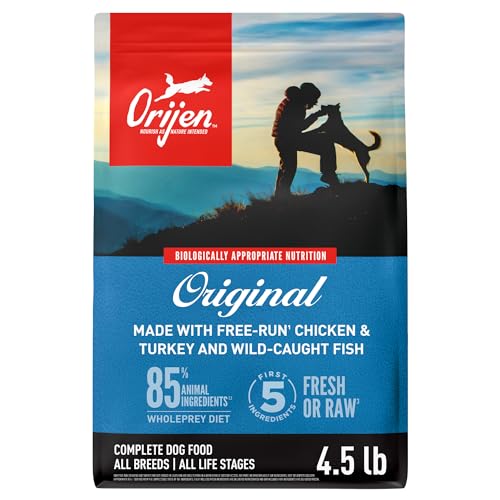
Orijen
Orijen Original Grain-Free Dry Dog Food
Biologically appropriate dog food made with free-run chicken and turkey, wild-caught fish, and cage-free eggs. 85% quality animal ingredients.
+ 85% animal ingredients
+ Grain-free recipe
- Premium price point
- May be too rich for sensitive stomachs

Blue Buffalo
Blue Buffalo Wilderness High Protein Dry Dog Food
High-protein, grain-free recipe inspired by the diet of wolves. Made with real deboned chicken and LifeSource Bits.
+ High protein content
+ LifeSource Bits antioxidants
- Some dogs may have allergies
- Price increased recently

Purina
Purina Pro Plan High Protein Chicken & Rice
Real chicken as the #1 ingredient with live probiotics guaranteed on the label, marketed for digestive and immune health.
+ Probiotics included
+ Affordable premium option
- Contains corn and wheat
- Some artificial additives