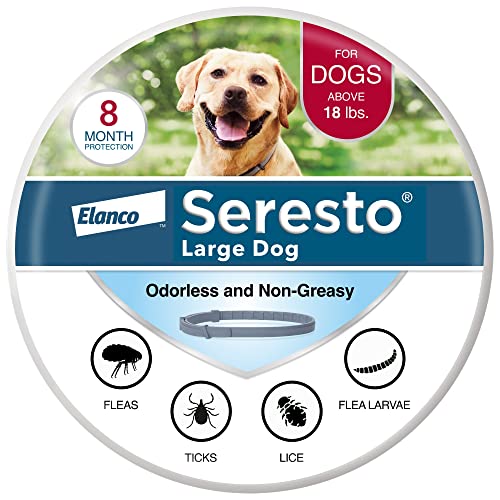
Seresto
Seresto Flea and Tick Collar for Dogs
The manufacturer states 8 months of flea and tick protection from a sustained-release collar. It is odourless and non-greasy in use.
View on AmazonLast updated: 2026-03-28
How we researched this: we compared the manufacturer's specifications and label claims, published guidance and reported owner experience. We have not tested this product ourselves, and nothing here is veterinary advice. Editorial policy
Strengths
- 8 months protection
- Odorless and non-greasy
- Water resistant
- Sold through veterinary channels
Drawbacks
- Expensive upfront cost
- Rare allergic reactions
- Counterfeits on market
Seresto Flea and Tick Collar for Dogs: In-Depth Research
Editorial analysis by the FurReviews team, based on manufacturer specifications, published guidance and reported owner experience. We have not tested this product ourselves.
How a sustained-release collar differs from a spot-on
A monthly spot-on delivers a dose that peaks and then declines over the month. A sustained-release collar is designed to release small amounts of its actives continuously over a much longer period, spreading through the skin's oil layer.
The practical appeal is obvious: one application instead of eight, no greasy patch, and no monthly reminder to forget. For households that routinely miss a monthly treatment — which is most households — consistent low-level protection can be worth more than a stronger product applied unreliably.
The manufacturer states up to eight months of protection. Treat that as a maximum under favourable conditions rather than a guarantee. Frequent swimming, frequent bathing with degreasing shampoos, and heavy parasite pressure all shorten effective duration.
Fit is not cosmetic
Getting the fit right matters both for efficacy and for safety.
Safety reporting, stated fairly
Flea collars of this type have attracted public attention and adverse-event reports, and it would be dishonest to skip that.
The regulatory position as it stands: the products remain registered and available, and regulators have reviewed reported incidents. Reported adverse events are dominated by localised skin reactions at the collar site. Reporting systems collect reports without establishing that the product caused the event, so a report count is not a measure of risk — but it is also not nothing.
What that means for an owner:
We are not in a position to tell you the product is risk-free, and neither is anyone else. We can tell you it is registered, widely used and veterinarian-supplied, that the reported issues are predominantly local, and that the decision belongs with you and your vet.
Multi-pet households
The house is most of the infestation
This applies to every flea product ever sold.
Only a small share of a household flea population is on the animal. The rest — eggs, larvae, and armoured pupae — is in carpet, bedding and floorboards, and nothing worn by the animal reaches pupae. Pupae hatch on their own schedule over weeks.
So fleas after starting a treatment are expected. What matters is the number falling. Clearing a real infestation takes about three months, and the free additions matter:
Ticks
If you live where tick-borne disease is a real risk, discuss coverage for your local tick species with your vet. Removal technique matters too: use a proper tick hook or fine-tipped tweezers, grip as close to the skin as possible and pull steadily. Never burn, smother or twist a tick.
Who should look elsewhere
If your dog swims constantly or is bathed frequently, an oral preventative avoids the wash-off question. If your animal has sensitive skin or has reacted to a collar before, a different format is sensible. And if you have dogs that chew each other's collars, choose something they cannot ingest.
Seresto Flea and Tick Collar for Dogs: Common Questions
How long does a flea collar actually last?
The manufacturer states up to eight months, and that is a maximum under favourable conditions rather than a guarantee. Frequent swimming, frequent bathing with degreasing shampoos and heavy parasite pressure all shorten the effective duration.
How tight should the collar be?
Two fingers between collar and neck. Too loose and the actives do not transfer into the skin's oil layer, which is the delivery mechanism; too tight causes pressure and irritation. Cut off the excess tail so it cannot be chewed, and check the skin underneath weekly at first.
Are flea collars safe?
They are registered products in continuous use, and reported adverse events are dominated by localised skin reactions at the collar site. Reporting systems record reports without establishing cause, so counts are not a measure of risk — but this is a pesticide worn continuously. Wash hands after fitting, keep children from handling it, watch the skin, and discuss it with your vet for young, elderly, unwell, pregnant or medicated animals.
Why am I still seeing fleas?
Because most of an infestation is not on the animal. Eggs, larvae and armoured pupae live in carpet and bedding, and nothing worn by the animal reaches pupae. Expect about three months of consistent treatment plus thorough vacuuming and hot-washed bedding, and treat every pet in the house.
Can I use a dog collar on my cat?
No. Never fit a dog parasite product to a cat — species formulations and doses differ and it can be dangerous. Buy the cat-specific version, and if you have animals that chew each other's collars, a collar may be the wrong format entirely.
Where to Buy
As an Amazon Associate, FurReviews earns from qualifying purchases at no extra cost to you.
Similar Products You Might Like

Greenies
Greenies Original Dental Dog Treats
Dental treats listed by the Veterinary Oral Health Council (VOHC) — check vohc.org for the current accepted claim. Made with natural ingredients, according to the manufacturer.
+ VOHC-listed
+ Sized by dog weight
- High calorie per treat
- Can cause digestive issues

Frontline
Frontline Plus Flea and Tick Treatment for Dogs
Monthly topical flea and tick prevention, labelled to kill fleas, ticks and chewing lice. Waterproof after 24 hours.
+ Long-established brand
+ Label covers eggs and larvae too
- Monthly application needed
- Can cause skin irritation

Nutramax
Cosequin Maximum Strength Joint Supplement
A glucosamine and chondroitin joint supplement for dogs, in a chewable tablet.
+ Widely stocked by vets and pet shops
+ Manufacturer cites clinical testing
- Evidence for glucosamine is mixed
- Daily dosing required
