Blue Buffalo
Blue Buffalo Wilderness High Protein Dry Dog Food
High-protein, grain-free recipe inspired by the diet of wolves. Made with real deboned chicken and LifeSource Bits.
View on AmazonLast updated: 2026-04-01
How we researched this: we compared the manufacturer's specifications and label claims, published guidance and reported owner experience. We have not tested this product ourselves, and nothing here is veterinary advice. Editorial policy
Strengths
- High protein content
- LifeSource Bits antioxidants
- No chicken by-products
- Widely available
Drawbacks
- Some dogs may have allergies
- Price increased recently
- Recall history
Blue Buffalo Wilderness High Protein Dry Dog Food: In-Depth Research
Editorial analysis by the FurReviews team, based on manufacturer specifications, published guidance and reported owner experience. We have not tested this product ourselves.
What "high protein, grain-free" actually means on a bag
Wilderness is Blue Buffalo's grain-free, higher-protein line. The marketing frame is a wolf-ancestry story; the formulation reality is a recipe with deboned chicken as the first ingredient, no corn, wheat or soy, and grain carbohydrate replaced with peas, potatoes and other legume or tuber sources.
Two things follow from that, and they pull in opposite directions.
Grain-free does not mean carbohydrate-free. Kibble needs starch to hold its shape through extrusion. Removing grain means replacing it, usually with peas, lentils, chickpeas or potato. The total carbohydrate load of a grain-free kibble is often similar to a grain-inclusive one. If you chose grain-free believing it was low-carb, that belief is not supported by the formulation.
Grain allergy in dogs is rare. The most commonly reported food allergens in dogs are animal proteins — beef, dairy and chicken lead most published lists — not grains. A dog itching on a chicken-based grain-free food has not had the most likely trigger removed.
The DCM question, stated accurately
This matters and deserves a straight answer rather than either panic or dismissal.
In 2018 the US Food and Drug Administration announced an investigation into reports of dilated cardiomyopathy in dogs eating diets high in peas, lentils, other legume seeds or potatoes — grain-free diets prominently among them — including in breeds not genetically predisposed to the disease.
What happened since is important. The FDA has published updates, has not established a causal link, and has stated it has not found a definitive relationship between these diets and DCM. Research is ongoing, findings have been mixed, and some published work has not reproduced the association.
The honest summary: this is an open question, not a settled danger and not a debunked scare. If your dog is on a grain-free diet and you are uncertain, the productive step is a conversation with your vet — who can weigh your individual dog's breed, age and heart history — rather than a decision made from a bag or from a forum. Do not stop a diet your dog is thriving on because of a headline, and do not dismiss a vet who raises it.
LifeSource Bits
These are the dark kibble pieces mixed through the bag: a separate cold-formed blend of vitamins, minerals and antioxidants, kept apart so heat-sensitive nutrients are not degraded by the main extrusion process. The principle is sound.
The practical note is that some dogs pick around them and leave them in the bowl. If yours does, the nutrient profile the bag promises is not what your dog is actually eating.
Recall history, in context
Blue Buffalo has had recalls. So has nearly every major pet food brand, including the ones vets most often recommend. Recalls are a normal part of a regulated food industry and, taken alone, they tell you less than people assume.
The more useful question is what a manufacturer does about quality: whether it owns or contracts its plants, whether a qualified nutritionist formulates the diets, and whether it runs feeding trials rather than only formulating to meet a nutrient profile on paper. Those are the questions the World Small Animal Veterinary Association's diet-selection guidelines point owners at, and they are worth asking of any brand.
Reading the label properly
Two label skills are worth more than any brand loyalty:
Transitioning and portioning
Switch over seven to ten days. High-protein, richer foods cause loose stools more often than plain ones when introduced abruptly.
Feed to body condition, not to the bag. Feeding guidelines are population averages and most are generous. You should be able to feel ribs easily without pressing, and see a waist from above. Adjust portions to keep that, whatever the bag says.
Who should look elsewhere
If you are investigating itching, chronic ear infections or digestive upset, a chicken-based food is the wrong tool — you need a limited-ingredient or hydrolysed diet chosen with your vet. If your dog has a diagnosed heart condition, diet is a conversation for your vet, not a shelf decision. And if your dog is simply overweight, portion control on the current food usually does more than a new bag.
Sources for health information
- AAFCO — pet food labels and nutrient profiles
- WSAVA Global Nutrition Committee — selecting a pet food
- U.S. FDA Center for Veterinary Medicine — animal food, drugs and safety alerts
- ASPCA Animal Poison Control Center — toxic foods, plants and products
- American Veterinary Medical Association — pet owner resources
Blue Buffalo Wilderness High Protein Dry Dog Food: Common Questions
Is grain-free dog food better?
Not inherently. Grain allergy in dogs is uncommon — the most frequently reported food allergens are animal proteins like beef, dairy and chicken. Grain-free also does not mean low-carbohydrate, because kibble needs starch and grain is usually replaced with peas, lentils or potato.
Is grain-free food linked to heart disease in dogs?
It is an open question. The FDA opened an investigation in 2018 into DCM reports in dogs eating diets high in legumes and potatoes, and has since said it has not established a causal link. Research continues and findings are mixed. If you are uncertain, discuss your individual dog with your vet rather than deciding from a headline.
What are LifeSource Bits?
The dark pieces in the bag — a separately cold-formed blend of vitamins, minerals and antioxidants kept apart so heat-sensitive nutrients are not degraded during the main cooking process. If your dog picks around them and leaves them, it is not getting the nutrient profile the bag describes.
Should a recall history put me off a brand?
Not on its own. Nearly every major pet food brand has had recalls, including the ones vets most often recommend. More useful questions are whether the company owns its plants, employs a qualified nutritionist to formulate, and runs feeding trials rather than only formulating on paper.
How much should I feed?
Feed to body condition rather than to the bag. Feeding guidelines are population averages and tend to be generous. You should be able to feel ribs easily without pressing and see a waist from above — adjust the portion to keep that.
Where to Buy
As an Amazon Associate, FurReviews earns from qualifying purchases at no extra cost to you.
Similar Products You Might Like
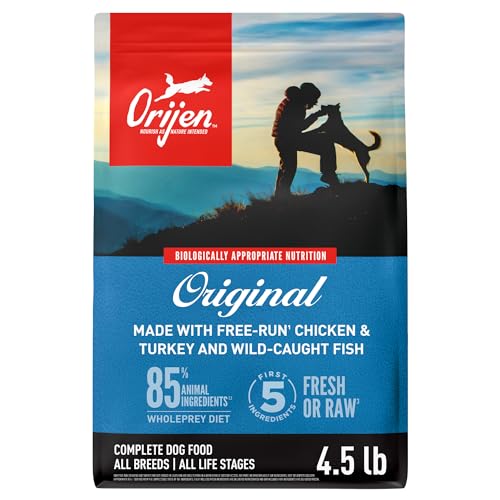
Orijen
Orijen Original Grain-Free Dry Dog Food
Biologically appropriate dog food made with free-run chicken and turkey, wild-caught fish, and cage-free eggs. 85% quality animal ingredients.
+ 85% animal ingredients
+ Grain-free recipe
- Premium price point
- May be too rich for sensitive stomachs

Royal Canin
Royal Canin Size Health Nutrition Medium Adult
Precisely formulated nutrition for medium dogs 23-55 lbs. Marketed for digestive health and stool quality.
+ Size-specific nutrition
+ Sold through veterinary channels
- Contains grains
- Higher price per pound

Purina
Purina Pro Plan High Protein Chicken & Rice
Real chicken as the #1 ingredient with live probiotics guaranteed on the label, marketed for digestive and immune health.
+ Probiotics included
+ Affordable premium option
- Contains corn and wheat
- Some artificial additives