Orijen
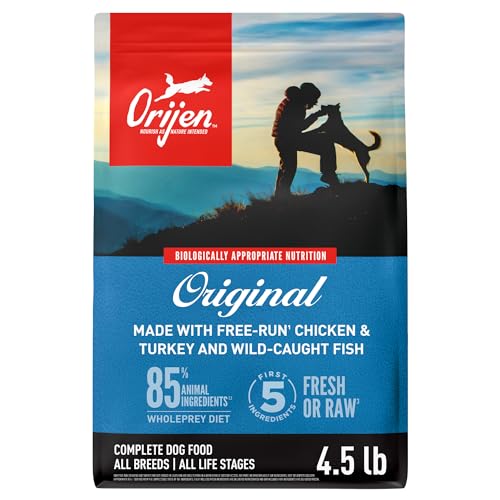
Orijen Original Grain-Free Dry Dog Food
Biologically appropriate dog food made with free-run chicken and turkey, wild-caught fish, and cage-free eggs. 85% quality animal ingredients.
View on AmazonLast updated: 2026-04-01
How we researched this: we compared the manufacturer's specifications and label claims, published guidance and reported owner experience. We have not tested this product ourselves, and nothing here is veterinary advice. Editorial policy
Strengths
- 85% animal ingredients
- Grain-free recipe
- No artificial preservatives
- WholePrey ratios include organs and bone
Drawbacks
- Premium price point
- May be too rich for sensitive stomachs
- Strong smell
Orijen Original Grain-Free Dry Dog Food: In-Depth Research
Editorial analysis by the FurReviews team, based on manufacturer specifications, published guidance and reported owner experience. We have not tested this product ourselves.
What "biologically appropriate" is claiming
Orijen's whole proposition is ingredient density: a very high proportion of animal ingredients, including organ meat and bone rather than muscle meat alone, on the argument that this more closely resembles what a dog would eat as a whole prey animal.
The WholePrey concept is the interesting part and it is not marketing fluff. Organ meat and bone deliver nutrients — vitamin A and D from liver, calcium and phosphorus in a natural ratio from bone — that a muscle-meat-plus-synthetic-vitamin-pack recipe delivers differently. Whether a dog notices the difference is a separate question from whether the formulation logic is sound.
Rich is the operative word
This is the practical thing to understand before you buy a bag. High animal content means high protein and, importantly, high fat. That has consequences:
The strong smell owners mention is a direct consequence of the fish and organ content. It is not a sign the bag has gone off.
Grain-free and the DCM question
Orijen Original is grain-free, so the same open question applies as to every grain-free diet.
In 2018 the FDA opened an investigation into reports of dilated cardiomyopathy in dogs eating diets high in peas, lentils, other legume seeds or potatoes, including in breeds without a genetic predisposition. Since then the FDA has published updates, has not established causation, and has said it has not found a definitive link. Research is ongoing and results have been mixed.
That is the accurate state of it: unresolved. If your dog has a heart murmur, a breed predisposition, or you are simply unsure, that is a conversation to have with your vet about your individual dog. It is not a reason to panic, and it is not something to wave away.
The questions worth asking any premium brand
Price is not evidence. The diet-selection questions veterinary nutrition bodies suggest owners ask are the same for a boutique brand as for a supermarket one:
A brand that answers these clearly is telling you something. A brand that answers with sourcing photography is not.
Reading the AAFCO statement
The single most useful sentence on any bag is the AAFCO nutritional adequacy statement: which life stage the food is complete and balanced for, and whether that was established by formulation or by feeding trials. Feeding trials are the stronger evidence.
Check it says the life stage you need. "All life stages" includes growth, which means it meets puppy requirements — and for large-breed puppies you additionally need a statement covering growth of large-size dogs, because calcium control matters for developing joints.
Transitioning to a rich food
Go slower than the bag says. Ten to fourteen days rather than seven, starting at a small fraction of the bowl. If stools loosen, hold at the current ratio for a few days rather than pushing on.
If loose stools persist beyond the transition, this food may simply be too rich for that dog, and a moderate-fat food is not a lesser choice — it is the right one for that animal.
Who should look elsewhere
If your dog has a history of pancreatitis, or is on a fat-restricted diet, this is not the food — talk to your vet. If your dog has a sensitive digestive system, a moderate-fat, simpler recipe will likely suit better. And if you are investigating a suspected food allergy, a multi-protein food makes it impossible to identify a trigger; you need a limited-ingredient or hydrolysed diet chosen with your vet.
Sources for health information
- AAFCO — pet food labels and nutrient profiles
- WSAVA Global Nutrition Committee — selecting a pet food
- U.S. FDA Center for Veterinary Medicine — animal food, drugs and safety alerts
- ASPCA Animal Poison Control Center — toxic foods, plants and products
- American Veterinary Medical Association — pet owner resources
Orijen Original Grain-Free Dry Dog Food: Common Questions
Why is Orijen so expensive?
The ingredient deck is unusually animal-dense, including organ meat and bone rather than muscle meat alone, and fresh and raw animal ingredients cost more per unit of finished kibble than plant-based protein sources. Whether that is worth the difference for a healthy dog is a judgement call — a well-formulated mid-market food meets a healthy dog's needs.
My dog got loose stools switching to Orijen. What now?
Usually a transition that moved too fast for a rich food. Slow it down to ten to fourteen days and hold at the current ratio for a few days if stools loosen. If it persists past the transition, this food may simply be too rich for that dog, and a moderate-fat food is the right choice rather than a lesser one.
How much Orijen should I feed?
Less than you think. Calorie density is high, so feeding the same volume you fed of a cheaper food will make your dog gain weight. Start from the guideline, then feed to body condition — ribs easy to feel without pressing, a visible waist from above.
Is grain-free safe?
It is an unresolved question. The FDA opened an investigation in 2018 into DCM reports in dogs eating diets high in legumes and potatoes, and has since said it has not established a causal link. Research continues with mixed findings. If your dog has a heart murmur or a breed predisposition, discuss it with your vet.
Can puppies eat Orijen Original?
Check the AAFCO statement on the bag for the life stage it covers. If it states all life stages, that includes growth. For a large-breed puppy you additionally need a statement covering growth of large-size dogs, because controlled calcium matters for developing joints.
Where to Buy
As an Amazon Associate, FurReviews earns from qualifying purchases at no extra cost to you.
Similar Products You Might Like

Blue Buffalo
Blue Buffalo Wilderness High Protein Dry Dog Food
High-protein, grain-free recipe inspired by the diet of wolves. Made with real deboned chicken and LifeSource Bits.
+ High protein content
+ LifeSource Bits antioxidants
- Some dogs may have allergies
- Price increased recently

Royal Canin
Royal Canin Size Health Nutrition Medium Adult
Precisely formulated nutrition for medium dogs 23-55 lbs. Marketed for digestive health and stool quality.
+ Size-specific nutrition
+ Sold through veterinary channels
- Contains grains
- Higher price per pound

Purina
Purina Pro Plan High Protein Chicken & Rice
Real chicken as the #1 ingredient with live probiotics guaranteed on the label, marketed for digestive and immune health.
+ Probiotics included
+ Affordable premium option
- Contains corn and wheat
- Some artificial additives