Merrick
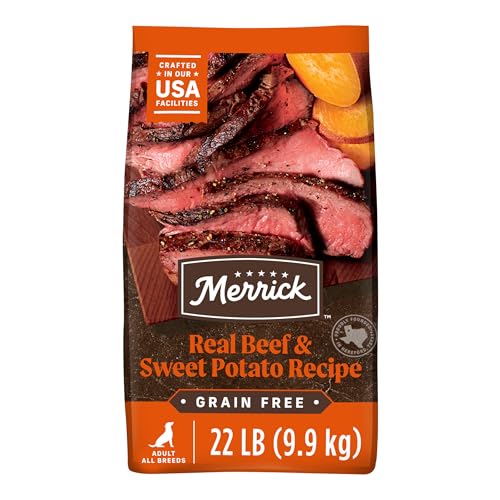
Merrick Grain-Free Real Texas Beef + Sweet Potato
Grain-free recipe with deboned beef as #1 ingredient. Made in the USA, with animal protein and fat sources making up the bulk of the recipe.
View on AmazonLast updated: 2026-03-28
How we researched this: we compared the manufacturer's specifications and label claims, published guidance and reported owner experience. We have not tested this product ourselves, and nothing here is veterinary advice. Editorial policy
Strengths
- USA made
- Deboned beef #1
- No corn/wheat/soy
- Added omega fatty acids
Drawbacks
- Expensive
- Rich formula can cause gas
- Kibble size varies
Merrick Grain-Free Real Texas Beef + Sweet Potato: In-Depth Research
Editorial analysis by the FurReviews team, based on manufacturer specifications, published guidance and reported owner experience. We have not tested this product ourselves.
What this recipe is built around
Deboned beef leads the ingredient list, grain carbohydrate is replaced with sweet potato and legumes, and there is no corn, wheat or soy. It is a single-animal-protein, grain-free recipe, which is a meaningfully different thing from a multi-protein blend.
Single-protein matters for one specific reason: if you are working through a suspected food sensitivity with your vet, a recipe built on one named animal protein is something you can actually reason about. A blend of chicken, lamb and fish is not.
It does not make this a hypoallergenic diet. A true elimination trial uses a novel protein the dog has never eaten, or a hydrolysed diet, run strictly for weeks with zero treats or table food. That is a veterinary process, not a shelf purchase. But single-protein is the right shape to start from.
Reading "deboned beef is the first ingredient" honestly
Ingredient lists are ordered by weight before cooking. Fresh deboned beef is roughly three-quarters water, and most of that water is driven off during extrusion. After cooking, a fresh meat listed first contributes considerably less to the finished kibble than its position implies.
This is not a trick specific to this brand — it is how the labelling rule works everywhere, and it is why ingredient-list order is a poor tool for comparing foods. The more informative places to look are the guaranteed analysis and the AAFCO nutritional adequacy statement.
Grain-free and the DCM question
The same open question applies as to every grain-free diet, and it deserves accuracy rather than either alarm or dismissal.
The FDA opened an investigation in 2018 into reports of dilated cardiomyopathy in dogs eating diets high in peas, lentils, other legume seeds or potatoes, including in breeds without a genetic predisposition. Since then the FDA has published updates, has not established a causal link, and has said it has not found a definitive relationship. Research continues and findings have been mixed.
The productive response is a conversation with your vet about your individual dog — breed, age, any murmur or heart history — rather than a decision made from a bag or a forum thread.
"Rich formula can cause gas" — what is actually happening
Two things usually drive flatulence on a food like this.
The transition was too fast. The gut bacteria that ferment a diet take time to shift. A seven-day switch is a minimum and ten to fourteen days suits a rich food better.
Legume content. Peas, lentils and chickpeas are fermentable, and fermentation in the large intestine produces gas. Some dogs simply produce more on a legume-heavy recipe, and that does not resolve with time.
If gas persists well past the transition, a recipe with less legume content is a reasonable change — and is worth mentioning to your vet if it comes with loose stools, weight loss or discomfort rather than being merely antisocial.
Kibble size, and why it varies
Owners note inconsistent kibble size. Extrusion produces some variation between batches, and it is cosmetic rather than a quality problem.
If your dog bolts its food, kibble size is not your fix anyway — a slow-feeder bowl or a snuffle mat does far more, and matters most in deep-chested breeds where fast eating with air swallowing is part of the bloat risk picture.
Portioning a rich food
Higher fat means higher calories per cup. Feeding the same volume you fed of a leaner food will put weight on the dog.
Feed to body condition: ribs easy to feel without pressing, a visible waist from above, a tuck from the side. Adjust the portion to hold that, whatever the bag's guideline says — those guidelines are population averages and tend to be generous.
Who should look elsewhere
If your dog has a history of pancreatitis or is on a fat-restricted diet, a richer food is a vet conversation first. If gas or loose stools persist beyond a proper transition, a lower-legume recipe is worth trying. And if you are genuinely investigating a food allergy, a single common protein is a starting point but not a diagnostic tool — that needs a vet-supervised elimination trial with a novel or hydrolysed protein.
Sources for health information
- AAFCO — pet food labels and nutrient profiles
- WSAVA Global Nutrition Committee — selecting a pet food
- U.S. FDA Center for Veterinary Medicine — animal food, drugs and safety alerts
- ASPCA Animal Poison Control Center — toxic foods, plants and products
- American Veterinary Medical Association — pet owner resources
Merrick Grain-Free Real Texas Beef + Sweet Potato: Common Questions
Is a single-protein food good for allergies?
It is the right shape to reason about, but it is not a diagnostic tool. A true elimination trial uses a novel protein the dog has never eaten, or a hydrolysed diet, run strictly for weeks with no treats or table food — and that is a vet-supervised process, not a shelf purchase.
Why does my dog get gas on this food?
Usually the transition was too fast, or the legume content. Peas, lentils and chickpeas ferment in the large intestine and produce gas, and some dogs simply produce more on legume-heavy recipes. Extend the transition to ten to fourteen days; if it persists, a lower-legume recipe is a reasonable change.
Does 'deboned beef first' mean it's mostly beef?
Less than it sounds. Ingredient lists are ordered by weight before cooking, and fresh meat is roughly three-quarters water, most of which is driven off during extrusion. That is how the labelling rule works for every brand, which is why ingredient order is a poor way to compare foods.
Is grain-free food risky?
It is unresolved. The FDA opened an investigation in 2018 into DCM reports in dogs on diets high in legumes and potatoes, and has since said it has not established a causal link. Research continues with mixed findings. Discuss your individual dog with your vet rather than deciding from a headline.
Why is the kibble size inconsistent?
Extrusion produces some batch-to-batch variation. It is cosmetic. If your dog bolts its food, a slow-feeder bowl or snuffle mat does far more than kibble size — and that matters most in deep-chested breeds, where fast eating is part of the bloat risk picture.
Where to Buy
As an Amazon Associate, FurReviews earns from qualifying purchases at no extra cost to you.
Similar Products You Might Like
Orijen
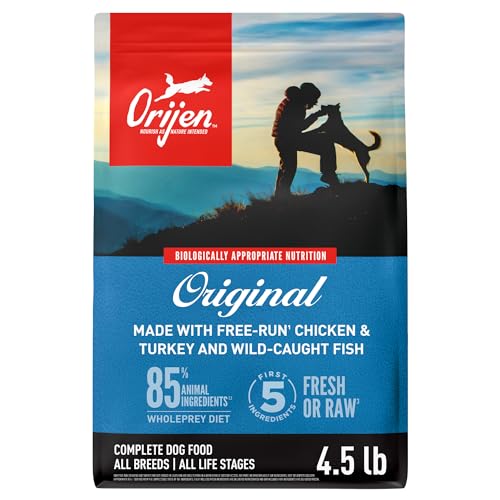
Orijen Original Grain-Free Dry Dog Food
Biologically appropriate dog food made with free-run chicken and turkey, wild-caught fish, and cage-free eggs. 85% quality animal ingredients.
+ 85% animal ingredients
+ Grain-free recipe
- Premium price point
- May be too rich for sensitive stomachs

Blue Buffalo
Blue Buffalo Wilderness High Protein Dry Dog Food
High-protein, grain-free recipe inspired by the diet of wolves. Made with real deboned chicken and LifeSource Bits.
+ High protein content
+ LifeSource Bits antioxidants
- Some dogs may have allergies
- Price increased recently

Royal Canin
Royal Canin Size Health Nutrition Medium Adult
Precisely formulated nutrition for medium dogs 23-55 lbs. Marketed for digestive health and stool quality.
+ Size-specific nutrition
+ Sold through veterinary channels
- Contains grains
- Higher price per pound
