
Chuckit!
Chuckit! Ultra Ball Dog Toy
High-bounce, ultra-durable rubber ball designed for the game of fetch. Compatible with Chuckit! launchers.
View on AmazonLast updated: 2026-04-03
How we researched this: we compared the manufacturer's specifications and label claims, published guidance and reported owner experience. We have not tested this product ourselves, and nothing here is veterinary advice. Editorial policy
Strengths
- Extremely bouncy
- Floats in water
- Fits standard launchers
- Very affordable
Drawbacks
- Not for aggressive chewers
- Gets dirty easily
- Can roll under furniture
Chuckit! Ultra Ball Dog Toy: In-Depth Research
Editorial analysis by the FurReviews team, based on manufacturer specifications, published guidance and reported owner experience. We have not tested this product ourselves.
Why a purpose-made fetch ball beats a tennis ball
This is not a marketing point, it is a dental one.
Tennis ball felt is abrasive. It picks up grit and sand, and a dog that spends years carrying and chewing tennis balls wears its teeth down in a characteristic flat-topped pattern that veterinary dentists call "blunting". In serious cases the wear exposes the pulp and the tooth needs treatment.
A smooth, high-density rubber ball has no abrasive surface. For a dog that fetches daily, that is a real difference over a lifetime, and it is the single best reason to spend money on a fetch ball.
The other differences — the bounce, the buoyancy, the visibility on grass — are conveniences. The teeth are the reason.
Size is a safety decision, not a preference
A ball that can pass into the back of a dog's throat can lodge there and obstruct the airway. This has killed dogs, most often large dogs given balls sized for medium ones.
The rule: the ball must be too large to fit past the back teeth, always. If you have a large or giant breed, buy the large size, not the standard one. If you are unsure, size up — there is no downside to a slightly-too-large ball and a catastrophic one to a slightly-too-small ball.
Balls that compress are a particular risk, because a ball that fits when squashed does not come back out easily.
Launchers: convenience with a caveat
A launcher throws further with less effort and keeps slobber off your hand. It also throws much further than you can, and that is worth thinking about.
Repetitive high-speed fetch with hard braking and twisting turns is hard on joints, particularly in:
Cruciate ligament injuries and shoulder problems are common in dogs that do a lot of high-speed fetch. Warming up with a few minutes of walking first, throwing along the ground rather than high, and avoiding sharp direction changes on slippery grass all reduce the load.
The bigger point about ball obsession
Fetch is easy to overdo, and not only physically.
Repetitive chasing is self-reinforcing and produces adrenaline. A dog that gets an hour of thrown-ball chasing every day can become more aroused rather than more settled — fitter, more wired and less able to switch off. Owners often read the resulting restlessness as needing more exercise, which makes it worse.
A more useful pattern: shorter fetch sessions, mixed with sniffing, training and free exploration. Sniffing in particular is genuinely calming for dogs and tires them in a way running does not. Ten minutes of scatter feeding in long grass settles a dog better than twenty minutes of fetch.
Build a reliable "drop" and "wait" so the game has structure and pauses, rather than being a continuous chase.
Water, visibility and the practical bits
It floats, which makes it a good water toy — and a dog swimming for a ball is excellent low-impact exercise for joints, far kinder than fetch on land.
Bright colours help you find it, though it is worth knowing dogs are dichromatic: blues and yellows are vivid to them, while reds and oranges are hard for them to distinguish from green grass. Dogs mostly find balls by scent anyway, but a blue or yellow ball is easier for both of you.
It is not a chew toy
This is a fetch ball, and a dog left alone to chew one will eventually get through it. Swallowed rubber fragments can cause an intestinal obstruction, which is surgery.
Put it away between sessions. That also keeps it special, which makes it work better as a reward.
Who should look elsewhere
If your dog chews rather than fetches, buy a chew toy — this will not survive it. If your dog is a growing puppy, elderly or arthritic, keep fetch short and low and consider swimming instead. And if your dog is ball-obsessed and permanently wired, the answer is less fetch and more sniffing, not a better ball.
Chuckit! Ultra Ball Dog Toy: Common Questions
Are tennis balls bad for dogs?
The felt is abrasive and picks up grit, and dogs that carry and chew tennis balls for years wear their teeth down in a characteristic flat-topped pattern. In serious cases the wear exposes the pulp. A smooth rubber ball has no abrasive surface, which is the best reason to use one.
What size ball should I buy?
Large enough that it cannot pass the back teeth into the throat — always. Balls sized for medium dogs have choked large dogs. If you have a large or giant breed, buy the large size, and if you are unsure, size up. There is no downside to a slightly large ball.
Is a ball launcher bad for my dog?
Not in itself, but it throws much further than you can, and repetitive high-speed fetch with hard braking and twisting turns loads joints — especially in growing puppies, large breeds, older dogs and any dog not warmed up. Warm up first, throw along the ground rather than high, and keep sessions short.
My dog is obsessed with fetch. Is that a problem?
It can be. Repetitive chasing is self-reinforcing and produces adrenaline, so a dog on daily long fetch sessions can become more wired rather than more settled. Shorter sessions mixed with sniffing, training and free exploration work better — sniffing is genuinely calming and tires a dog in a way running does not.
Can my dog chew on it?
No, it is a fetch ball. A dog left alone with one will eventually get through it, and swallowed rubber can cause an intestinal obstruction that needs surgery. Put it away between sessions, which also keeps it valuable as a reward.
Where to Buy
As an Amazon Associate, FurReviews earns from qualifying purchases at no extra cost to you.
Similar Products You Might Like

KONG
KONG Classic Dog Toy
A long-established natural rubber chew toy sold in several toughness levels, including one for power chewers. Can be stuffed with food.
+ Several toughness levels
+ Stuff with treats
- Can be destroyed by extreme chewers
- Needs to be cleaned regularly
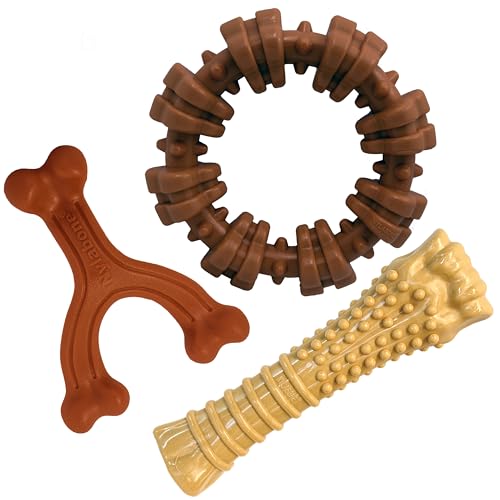
Nylabone
Nylabone Power Chew Durable Dog Toy
Tough nylon chew toy with textured surface for powerful chewers up to 50 lbs. Bacon flavored.
+ Hard nylon
+ Textured surface
- Not edible
- Can splinter over time

BarkBox
BarkBox Super Chewer Rubber Bone
Heavy-duty rubber chew toy designed for aggressive chewers. Peanut butter scented with treat-dispensing holes.
+ Built for power chewers
+ Treat dispensing
- Strong smell fades
- Can stain carpet
