
Nutro
Nutro Ultra Senior Dry Dog Food
Senior-specific formula with a trio of proteins from chicken, lamb, and salmon. Non-GMO ingredients for aging dogs.
View on AmazonLast updated: 2026-04-10
How we researched this: we compared the manufacturer's specifications and label claims, published guidance and reported owner experience. We have not tested this product ourselves, and nothing here is veterinary advice. Editorial policy
Strengths
- Triple protein blend
- Senior-specific formula
- Non-GMO ingredients
- Marketed for joint support
Drawbacks
- Pricey for senior food
- Smaller kibble size
- Limited availability
Nutro Ultra Senior Dry Dog Food: In-Depth Research
Editorial analysis by the FurReviews team, based on manufacturer specifications, published guidance and reported owner experience. We have not tested this product ourselves.
What "senior" on a bag of dog food does and does not mean
There is no legal definition of a senior dog food. AAFCO, the body whose nutrient profiles most US foods are formulated against, recognises two life stages — growth/reproduction and adult maintenance — and senior formulas are sold under adult maintenance. So the word on the bag is a marketing category, not a regulated standard.
That does not make senior formulas pointless. It means you have to read what a particular formula actually changes, because different brands change different things. The useful questions are: is the protein still adequate, is the calorie density lower, and has anything been added for joints?
What this formula actually changes
Nutro Ultra Senior is built around a three-protein blend — chicken, lamb and salmon — rather than a single meat, and includes added glucosamine and chondroitin for joint support. It is marketed as non-GMO-sourced ingredients.
The multi-protein approach has one concrete advantage for older dogs and one concrete drawback:
The protein myth worth clearing up
For decades senior foods were formulated low in protein on the belief that protein burdens ageing kidneys. Current veterinary nutrition guidance does not support restricting protein in healthy older dogs. Older dogs lose lean muscle mass, and adequate good-quality protein is part of slowing that.
Protein restriction is a therapeutic intervention for dogs with diagnosed kidney disease, prescribed by a vet, using a therapeutic diet. It is not a general precaution for healthy old dogs. If a senior food's main selling point is that it is low in protein, that is a reason for scepticism, not confidence.
Glucosamine and chondroitin: honest expectations
These are in almost every senior dog food. The evidence for oral joint supplements in dogs is mixed — some studies show modest improvement in comfort and mobility, others show little separation from placebo, and dose matters.
The practical point is that the amount in a maintenance food is generally well below what a therapeutic joint supplement delivers. Treat it as a small bonus, not as treatment. If your dog has diagnosed arthritis, the conversation is with your vet about weight, pain management and dosed supplementation, not about which kibble to buy.
Kibble size and the ageing mouth
This formula uses a smaller kibble, which is listed as a drawback by owners of large dogs who want their dog to chew rather than inhale. For dogs with dental disease or missing teeth — common in seniors — a smaller kibble is the right choice, and it is easier to soften with warm water.
If your senior is a large breed with good teeth, a larger kibble slows eating and does more for dental abrasion. Consider a large-breed senior formula instead.
When to switch, and how
Most dogs do not need a senior food the day they hit an arbitrary birthday. The sensible triggers are weight creep on the same food and portion, visible stiffness after rest, or a vet flagging body condition at a check-up. Small breeds age later than giant breeds — a Great Dane is senior years before a Jack Russell of the same age.
Transition over seven to ten days, mixing an increasing proportion of the new food. Older digestive systems handle abrupt changes worse than young ones do.
Who should look elsewhere
If you are investigating itching, chronic ear infections or digestive upset, you need a limited-ingredient or hydrolysed diet, not a three-protein blend. If your dog has diagnosed kidney, heart or liver disease, you need a therapeutic diet from your vet, and no over-the-counter senior food substitutes for one. And if your dog is simply carrying extra weight, portion control on their existing food usually does more than a new bag.
Sources for health information
- AAFCO — pet food labels and nutrient profiles
- WSAVA Global Nutrition Committee — selecting a pet food
- U.S. FDA Center for Veterinary Medicine — animal food, drugs and safety alerts
- ASPCA Animal Poison Control Center — toxic foods, plants and products
- American Veterinary Medical Association — pet owner resources
Nutro Ultra Senior Dry Dog Food: Common Questions
When should I switch my dog to senior food?
Not on a birthday. Switch when the practical signs appear — weight gain on the same portions, stiffness after rest, reduced appetite, or a vet flagging body condition. Giant breeds reach that point years earlier than small breeds.
Do senior dogs need less protein?
Healthy senior dogs do not. Current veterinary nutrition guidance does not support routine protein restriction in healthy older dogs, and adequate protein helps slow age-related muscle loss. Protein restriction is a therapeutic step for diagnosed kidney disease, prescribed by a vet.
Is the glucosamine in senior dog food enough for arthritis?
Generally no. The amount in a maintenance food is well below a therapeutic dose, and the evidence for oral joint supplements in dogs is mixed. Treat it as a bonus. Diagnosed arthritis needs a vet-led plan covering weight, pain relief and dosing.
Is a three-protein food good for a dog with food sensitivities?
No — it is the opposite of what you want. Identifying a sensitivity needs a single novel protein or a hydrolysed diet. A blend of chicken, lamb and salmon makes it impossible to isolate a trigger.
How do I transition to a new senior food?
Over seven to ten days, starting at roughly a quarter new food and increasing every few days. Older dogs tolerate abrupt diet changes less well than young ones, and a rushed switch usually shows up as loose stools.
Where to Buy
As an Amazon Associate, FurReviews earns from qualifying purchases at no extra cost to you.
Similar Products You Might Like
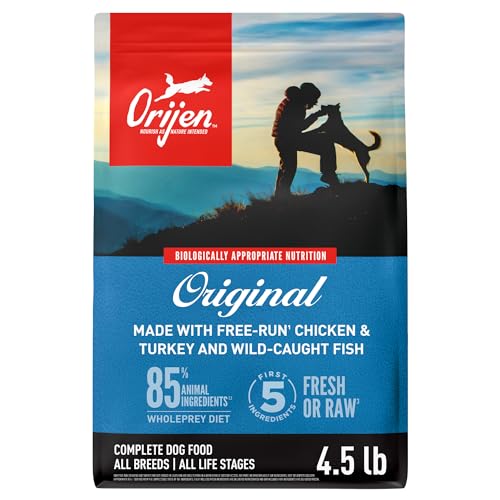
Orijen
Orijen Original Grain-Free Dry Dog Food
Biologically appropriate dog food made with free-run chicken and turkey, wild-caught fish, and cage-free eggs. 85% quality animal ingredients.
+ 85% animal ingredients
+ Grain-free recipe
- Premium price point
- May be too rich for sensitive stomachs

Blue Buffalo
Blue Buffalo Wilderness High Protein Dry Dog Food
High-protein, grain-free recipe inspired by the diet of wolves. Made with real deboned chicken and LifeSource Bits.
+ High protein content
+ LifeSource Bits antioxidants
- Some dogs may have allergies
- Price increased recently

Royal Canin
Royal Canin Size Health Nutrition Medium Adult
Precisely formulated nutrition for medium dogs 23-55 lbs. Marketed for digestive health and stool quality.
+ Size-specific nutrition
+ Sold through veterinary channels
- Contains grains
- Higher price per pound
