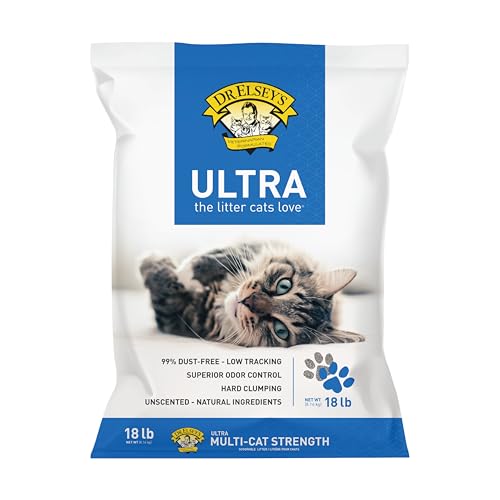
Dr. Elsey's
Dr. Elsey's Premium Clumping Cat Litter
Hard-clumping unscented clay litter the manufacturer markets as hypoallergenic and 99.9% dust-free. 40 lb bag.
View on AmazonLast updated: 2026-04-03
How we researched this: we compared the manufacturer's specifications and label claims, published guidance and reported owner experience. We have not tested this product ourselves, and nothing here is veterinary advice. Editorial policy
Strengths
- Hard clumping (owner reports)
- Marketed 99.9% dust-free
- Strong odour control (owner reports)
- Unscented
Drawbacks
- Very heavy bag
- Tracking outside box
- Not flushable
Dr. Elsey's Premium Clumping Cat Litter: In-Depth Research
Editorial analysis by the FurReviews team, based on manufacturer specifications, published guidance and reported owner experience. We have not tested this product ourselves.
Dust is the score that matters most
Most litter comparisons lead with odour control. Dust deserves to come first, for two reasons.
For the cat. Fine clay dust is inhaled at close range every time the cat digs, several times a day, for years. Feline asthma is more common than most owners realise, and a cat that begins coughing, wheezing or making a distinctive crouched hacking motion after a litter change is telling you something specific. Cats with asthma are noticeably worse on dusty litter.
For you. Pouring a heavy bag into a box at floor level puts clay dust directly in your breathing zone.
Practical habits that help regardless of brand: pour slowly and from low down, tip rather than shake, and keep the box in a ventilated space.
Unscented is a feature, not an omission
Cats have a far more sensitive sense of smell than we do, and litter box aversion is one of the leading causes of house soiling.
A heavily perfumed litter smells pleasant to you and overwhelming to the cat standing in it. Some cats simply stop using it, and once a cat has found an alternative surface it likes, getting it back to the box is hard work.
If your cat has ever gone outside the box after a litter change, the scent is a prime suspect, and unscented is the safe default. Odour control done properly comes from clumping hard enough that urine leaves the box daily — not from fragrance layered over it.
Clumping strength is what makes daily scooping quick
A hard clump lifts out whole. A weak clump crumbles when you scoop it, leaves wet fragments in the box, and those fragments are the smell you notice two days later.
Clumping strength is also what lets you scoop rather than scrape. Clumps that stick to the base of the box are almost always a depth problem rather than a litter problem — see below.
The three things that beat any brand
Full changes every two to four weeks for one cat, more often with several, with the box washed out in unscented soap and water. A box that still smells after a full change and a wash needs replacing.
Box size, which is usually wrong
The box should be roughly one and a half times the cat's body length from nose to tail base. Most commercially sold litter boxes are smaller than that.
A large plastic storage tub makes an excellent and inexpensive litter box, and many cats visibly prefer one. For an arthritic older cat, cutting a low entry into one side of a tub solves the access problem that causes so many accidents in senior cats.
Weight and tracking
A large bag of clay litter is heavy, and that is a genuine consideration if carrying it is difficult. Lightweight and crystal litters exist and trade other properties for it.
For tracking: a deep, high-sided box does most of the work, because most tracking is litter kicked over the side during digging rather than carried on paws. Add a ridged or honeycomb mat that granules fall into — not a thin flat rubber sheet — and keep claws trimmed.
When it is medical
Changes in litter box behaviour are a medical sign first and a behavioural one second. Straining, frequent small visits, blood, or crying in the box all warrant a vet.
A male cat straining and producing little or nothing is a suspected urinary blockage — life-threatening, and needing a vet immediately, including out of hours.
Once medicine is ruled out, clean any marked spot with an enzymatic cleaner rather than an ammonia-based one. Ammonia smells like urine to a cat and invites repeat marking.
Who should look elsewhere
If carrying a large clay bag is difficult, lightweight or crystal litters trade weight for other properties. If your cat has a strong texture preference, that preference wins over any specification. And if your cat has recently started missing the box, see a vet before buying anything.
Dr. Elsey's Premium Clumping Cat Litter: Common Questions
Is dusty cat litter harmful?
It can be. Fine clay dust is inhaled at close range every time a cat digs, and feline asthma is more common than owners realise — a cat that starts coughing or wheezing after a litter change is telling you something. Low-dust litter is a health choice, not a convenience one, for the cat and for whoever pours the bag.
Should I use scented or unscented litter?
Unscented, as the default. Cats have a far more sensitive sense of smell than we do, and litter box aversion is a leading cause of house soiling. If your cat started going outside the box after a litter change, fragrance is a prime suspect. Real odour control comes from clumping hard enough to remove urine daily.
How deep should the litter be?
Seven to ten centimetres. Most people use much less, and shallow litter lets urine reach the base so clumps stick and break up when scooped — which scratches the box and leaves the fragments that smell. Deeper litter also tracks less.
How do I stop litter tracking everywhere?
A deep, high-sided box does most of it, because most tracking is litter kicked over the side while digging rather than carried on paws. Add a ridged or honeycomb mat that granules fall into — not a thin flat rubber sheet — and keep claws trimmed.
How big should a litter box be?
Roughly one and a half times the cat's body length from nose to tail base. Most boxes sold in shops are smaller than that. A large plastic storage tub makes an excellent cheap box, and cutting a low entry into one side solves the access problem that causes many accidents in arthritic older cats.
Where to Buy
As an Amazon Associate, FurReviews earns from qualifying purchases at no extra cost to you.
Similar Products You Might Like
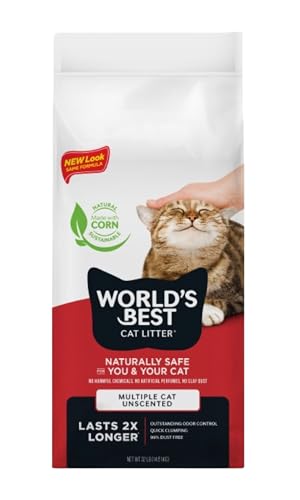
World's Best
World's Best Cat Litter Multiple Cat Formula
Naturally derived corn-based clumping litter. Flushable, septic safe, and lightweight with long-lasting odor control.
+ Flushable & septic safe
+ Natural corn-based
- Expensive per pound
- Can attract bugs

Arm & Hammer
Arm & Hammer Clump & Seal Multi-Cat Litter
Marketed with a 7-day odour-free guarantee and moisture-activated micro-granules. Heavy-duty clumping for multi-cat households.
+ 7-day odor guarantee
+ Moisture-activated
- Dusty when pouring
- Heavy to carry
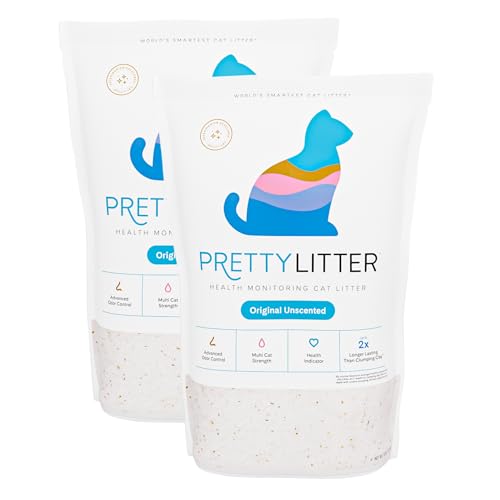
Pretty Litter
Pretty Litter Health Monitoring Cat Litter
Colour-changing silica gel litter. The company says colour changes can flag possible urinary issues worth a vet check; it is not a diagnosis.
+ Colour-change indicator
+ Lightweight
- Subscription required
- Expensive
