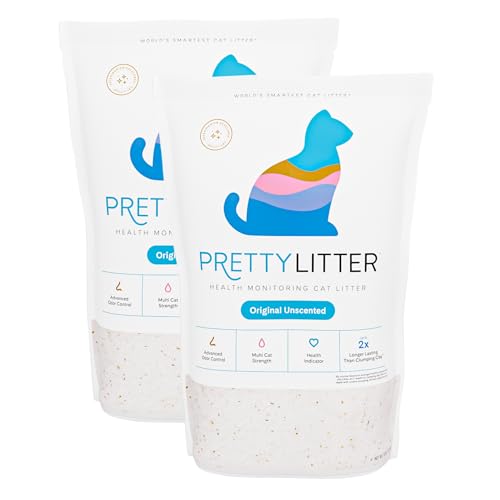
Pretty Litter
Pretty Litter Health Monitoring Cat Litter
Colour-changing silica gel litter. The company says colour changes can flag possible urinary issues worth a vet check; it is not a diagnosis.
View on AmazonLast updated: 2026-04-10
How we researched this: we compared the manufacturer's specifications and label claims, published guidance and reported owner experience. We have not tested this product ourselves, and nothing here is veterinary advice. Editorial policy
Strengths
- Colour-change indicator
- Lightweight
- Monthly delivery
- Virtually dust-free
Drawbacks
- Subscription required
- Expensive
- Doesn't clump
Pretty Litter Health Monitoring Cat Litter: In-Depth Research
Editorial analysis by the FurReviews team, based on manufacturer specifications, published guidance and reported owner experience. We have not tested this product ourselves.
What the colour change actually measures
For how colour-changing litter compares with smart litter box monitors, and the signs that mean you should call a vet whatever the litter shows, see our health-monitoring cat litter guide.
This is a silica gel crystal litter with a pH indicator, plus indicators that respond to blood. When urine hits it, the litter changes colour according to what it detects.
The published indications are broadly:
| Colour | What it indicates |
|---|---|
| Yellow to olive green | Normal urine pH range |
| Blue or dark green | Alkaline urine — associated with some urinary tract infections and struvite crystals |
| Orange | Acidic urine — associated with metabolic conditions and calcium oxalate crystals |
| Red | Blood detected, which can indicate infection, inflammation, stones or injury |
That is genuinely useful information, because cats are exceptionally good at hiding illness and urinary disease is both common and sometimes urgent.
What it is not, and this is the important part
It is a screening indicator, not a diagnosis. A colour change tells you something about urine chemistry at one moment. It does not tell you what is wrong, how serious it is, or what to do.
Two failure modes matter, in opposite directions:
The correct response to a colour change is to phone your vet and describe it, not to treat anything yourself.
The symptoms that override everything on this page
Regardless of what colour the litter is:
A male cat that is straining in the box and producing little or nothing is a urinary blockage until proven otherwise. That is a life-threatening emergency and needs a vet immediately, out of hours if necessary. Blocked cats can die within a day or two. Do not wait to see what the litter says.
Other signs that need a vet promptly: frequent small visits to the box, crying in the box, visible blood, licking at the genitals excessively, toileting outside the box in a previously reliable cat, or hiding and not eating.
Multi-cat households are the real limitation
If you have more than one cat, the litter tells you that a cat produced abnormal urine. It does not tell you which.
That is a serious practical limitation, and it is worth being clear-eyed about it before subscribing. Options are separating cats temporarily to identify the source, or accepting that a positive reading means every cat needs assessment. With three cats and one box the information is close to unusable.
Non-clumping changes your litter routine
Silica crystals absorb urine and are designed to be stirred rather than scooped. Solids are removed daily; the crystals are replaced wholesale on a schedule rather than topped up.
Practical consequences:
The subscription, stated plainly
Whether that is worth it depends on your cat. For a single cat with a history of urinary problems, ongoing pH and blood screening between vet visits has real value. For a healthy young cat in a multi-cat house, you are paying a monthly premium for information you may not be able to attribute.
Check the pause and cancellation terms before you start.
Litter box fundamentals that matter more
Whatever litter you use:
Getting these right prevents more problems than any monitoring product detects.
Who should look elsewhere
If you have several cats and cannot attribute a reading, the monitoring benefit largely disappears. If your cat dislikes crystal texture, forcing it risks house soiling, which is a far bigger problem than the one you are screening for. And if your cat has a known urinary condition, your vet's monitoring plan — with actual urine samples — is the real tool, not a litter colour.
Pretty Litter Health Monitoring Cat Litter: Common Questions
Does colour-changing litter actually detect illness?
It screens urine pH and the presence of blood, which can flag urinary infections, crystals and inflammation earlier than you would otherwise notice. It is a screening indicator, not a diagnosis — it cannot tell you what is wrong or how serious it is. The correct response to a colour change is to phone your vet and describe it.
Can my cat be ill even if the litter colour is normal?
Yes, and this is the most important limitation. Cats can have serious urinary or kidney disease with normal urine pH and no visible blood. Normal colour is not a clean bill of health and is not a reason to skip a check-up.
Does it work with more than one cat?
Only partly. It tells you that a cat produced abnormal urine, not which one. With several cats sharing boxes you either separate them temporarily to identify the source, or accept that a positive reading means assessing every cat. That is a real limitation to weigh before subscribing.
My cat won't use the crystal litter. What should I do?
Go back to what it used, and transition more gradually next time by mixing increasing proportions over a week or two. Crystals feel very different underfoot and cats have strong litter preferences. Litter box aversion is a leading cause of house soiling, which is a far worse problem than the one the litter screens for.
When is a cat's urinary problem an emergency?
A male cat straining in the box and producing little or nothing is a suspected blockage and is life-threatening — go to a vet immediately, out of hours if necessary. Blocked cats can die within a day or two. Do not wait to see what colour the litter turns.
Where to Buy
As an Amazon Associate, FurReviews earns from qualifying purchases at no extra cost to you.
Similar Products You Might Like
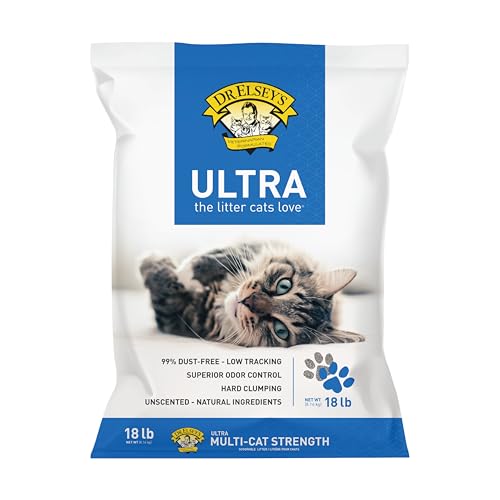
Dr. Elsey's
Dr. Elsey's Premium Clumping Cat Litter
Hard-clumping unscented clay litter the manufacturer markets as hypoallergenic and 99.9% dust-free. 40 lb bag.
+ Hard clumping (owner reports)
+ Marketed 99.9% dust-free
- Very heavy bag
- Tracking outside box
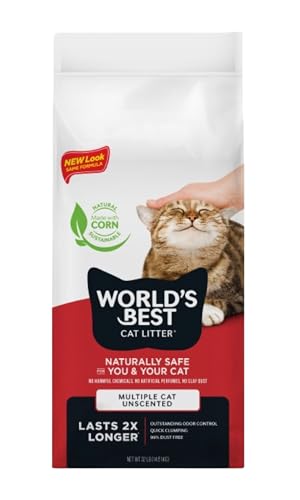
World's Best
World's Best Cat Litter Multiple Cat Formula
Naturally derived corn-based clumping litter. Flushable, septic safe, and lightweight with long-lasting odor control.
+ Flushable & septic safe
+ Natural corn-based
- Expensive per pound
- Can attract bugs

Arm & Hammer
Arm & Hammer Clump & Seal Multi-Cat Litter
Marketed with a 7-day odour-free guarantee and moisture-activated micro-granules. Heavy-duty clumping for multi-cat households.
+ 7-day odor guarantee
+ Moisture-activated
- Dusty when pouring
- Heavy to carry
