Kurgo
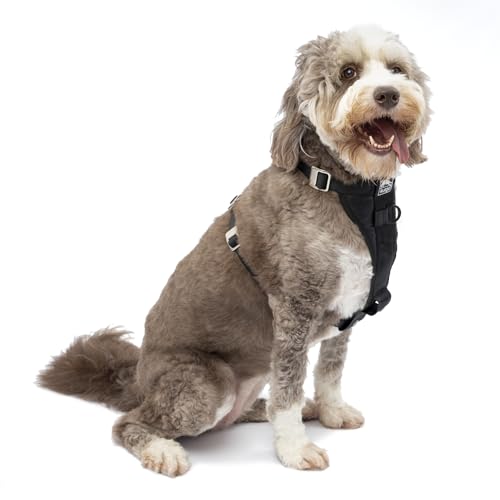
Kurgo Tru-Fit Enhanced Strength Smart Harness
A dog car harness the manufacturer says is crash-tested, which doubles as a walking harness. Steel nesting buckles and padded chest plate.
View on AmazonLast updated: 2026-04-10
How we researched this: we compared the manufacturer's specifications and label claims, published guidance and reported owner experience. We have not tested this product ourselves, and nothing here is veterinary advice. Editorial policy
Strengths
- Maker states crash-tested
- Dual-purpose design
- Steel buckles
- Lifetime warranty
Drawbacks
- Bulky for small dogs
- Complex to put on
- Limited padding
Kurgo Tru-Fit Enhanced Strength Smart Harness: In-Depth Research
Editorial analysis by the FurReviews team, based on manufacturer specifications, published guidance and reported owner experience. We have not tested this product ourselves.
An unrestrained dog is a projectile
At 30 mph, a 60 lb dog in a sudden stop carries roughly the same force as a small motorcycle. That force goes into the seat backs, the windscreen, or a passenger. This is the part of dog car safety that gets glossed over: restraint is not primarily about stopping the dog jumping into your lap. It is about what happens in the two-tenths of a second after an impact.
The Kurgo Tru-Fit exists to address that, and unlike a large share of "car harnesses" on the market it has been through independent crash testing at the manufacturer's stated size ranges — which is more than can be said for the generic seatbelt-loop harnesses sold alongside it.
What crash-tested actually means here
Read the claim precisely. Crash testing on pet restraints is voluntary, not government-mandated, and results apply to specific harness sizes tested with specific dummy weights. What it tells you is that the harness's load path — chest plate, webbing, and steel buckle — was engineered and validated to hold under impact loads rather than simply being a walking harness with a car-branded label.
Two design details carry that load:
The steel nesting buckle. Plastic side-release hardware is fine for walks and inadequate for crash forces. This is the single specification to check on any car harness you consider.
The padded chest plate. In a frontal impact the harness has to distribute force across the sternum and ribcage rather than concentrating it on the throat or a single strap. A broad, padded chest panel is what makes that possible, and it is why crash-rated harnesses look bulkier than walking harnesses.
Five adjustment points, and why you need all of them
The Tru-Fit adjusts at five points: two shoulder straps, the chest, and the belly on both sides. That sounds fussy and it is, but restraint gear only works when it fits closely — a loose harness lets the dog move before the webbing catches, and the resulting jolt is far worse than the same force taken up gradually.
Fitting sequence
Installing it in the car
The included tether loops through the harness's back attachment and clips into the seatbelt buckle, or the vehicle seatbelt threads through the tether loop. Two rules:
Keep the tether short. Adjust it so the dog can sit and lie down but cannot reach the footwell or stand fully. Long tethers allow the dog to build speed before the restraint engages, which is the failure people do not anticipate.
Use the back seat. Front airbags are dangerous to dogs for the same reasons they are dangerous to small children.
Never clip a car tether to a collar. In a crash, that is a neck injury.
Doubles as a walking harness — with caveats
The Tru-Fit has a leash ring, and many owners use it as their only harness. That works, but be realistic: the chest plate is more substantial than a walking harness needs, and in warm weather it holds heat. For long summer hikes a lighter Y-front harness is more comfortable. For a walk from the car to the trailhead it is perfectly fine, and having one harness that goes straight from car to walk without a change is genuinely convenient.
Sizing
Sizing is by chest girth measured behind the front legs, plus a check on neck circumference. Weight ranges on the packaging are a starting point only — deep-chested and barrel-chested dogs of identical weight need different sizes. If your measurement sits at the top of one size range, take the larger size; the straps take up slack far more easily than they create room.
Where it falls short
Bulk. It is a substantial piece of gear, and small dogs in particular can look swamped by it. For very small dogs, a crash-tested carrier secured to the seat is often the better answer than any harness.
Not chew-proof. Anxious dogs left alone in a car have chewed through tethers. Restraint is not a substitute for not leaving a dog in a vehicle.
Adjustment time. The five-point adjustment is a one-time job, but the first fitting takes real minutes, and the harness will need re-checking as a young dog grows.
FurReviews editorial verdict
If you drive with your dog regularly, a crash-tested harness with a steel buckle and a padded chest plate is the category to buy, and the Tru-Fit is the most widely available example of it. Fit it snugly, keep the tether short, use the back seat, and never clip the tether to a collar. Consider a secured crate or crash-tested carrier instead for very small dogs or for long-haul travel.
Kurgo Tru-Fit Enhanced Strength Smart Harness: Common Questions
Are dog car harnesses actually crash tested?
Some are and most are not — pet restraint testing is voluntary rather than legally mandated. The Kurgo Tru-Fit has been independently crash tested at the manufacturer's stated size ranges. Look for a steel nesting buckle and a broad padded chest plate, which are the load-bearing features generic harnesses lack.
Can I clip the car tether to my dog's collar?
Never. In an impact, all the force concentrates on the neck. The tether must connect to a harness that spreads load across the chest and ribcage.
How long should a dog car tether be?
Short enough that the dog can sit and lie down but cannot stand fully or reach the footwell. A long tether lets the dog build momentum before the restraint engages, which makes the eventual jolt considerably worse.
Can the Kurgo Tru-Fit be used as an everyday walking harness?
Yes, it has a leash ring and many owners use it for both. It is bulkier than a dedicated walking harness and retains heat in summer, so for long warm-weather hikes a lighter Y-front harness is more comfortable.
Where should a harnessed dog ride in the car?
In the back seat. Front passenger airbags pose the same danger to dogs that they do to small children, regardless of how good the harness is.
Where to Buy
As an Amazon Associate, FurReviews earns from qualifying purchases at no extra cost to you.
Similar Products You Might Like
Easy Walk
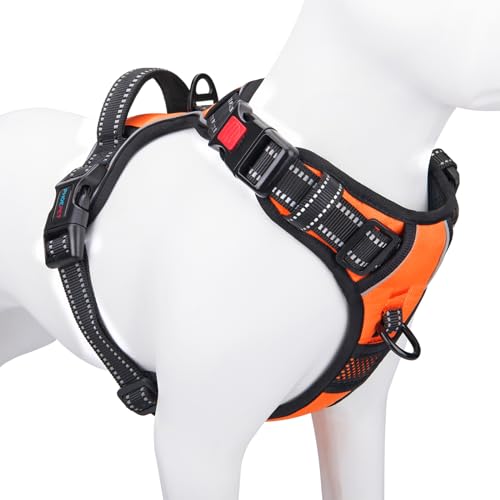
PHOEPET No Pull Dog Harness Medium Reflective Front Clip Vest with…
Easy Walk dog harnesses listed for comparison. We have not yet researched this product in depth — check the full specifications on the retailer's page.

Julius K9
IDC Powerharness, Size: XS/Mini-Mini, USA Flag
Julius K9 dog harnesses listed for comparison. We have not yet researched this product in depth — check the full specifications on the retailer's page.
Kurgo Tru
Enhanced Strength Tru-Fit Dog Car Harness
Kurgo Tru dog harnesses listed for comparison. We have not yet researched this product in depth — check the full specifications on the retailer's page.
