Best No-Pull Dog Harness 2026: Front-Clip & Step-In Compared
Front-clip, dual-clip, step-in and crash-tested dog harnesses compared, with a measuring guide and the training steps that stop pulling for good.
Affiliate Disclosure: FurReviews earns commissions from qualifying purchases. That does not affect what we recommend. Learn more

How we chose
- Clip position: a front clip redirects pulling, a back clip does not.
- Adjustment points and the maker's size chart, measured against the dog's chest girth.
- Whether the straps sit clear of the shoulder joint rather than across it.
- Build details that matter on a walk — padding, buckles and how easily it goes on.
Not judged: Whether it will stop your dog pulling. A harness helps; training does the rest.
Researched from labels, specifications and published guidance — we did not test these products. Editorial policy
A well-fitted harness spreads leash pressure across the chest instead of the neck, which is why many owners prefer one to a collar for walking — especially with small dogs and dogs that pull. This guide compares widely sold harnesses on their published features and fit ranges.
How this guide was put together: we compared manufacturer specifications, labels, published guidance and reported owner experience. We have not tested these products ourselves, and nothing here is veterinary advice.
Harness or collar?
Pressure: a harness moves leash pressure away from the throat. Small breeds prone to airway problems are the dogs most often advised to walk on a harness; if your dog coughs or wheezes on walks, ask your vet.
Control: a front-clip harness gives more control of a strong puller than a collar or a back-clip harness.
The caveat: a back-clip harness on an untrained puller makes pulling comfortable. Front-clip or dual-clip is the better choice while you train.
Dual-clip, padded: Ruffwear Front Range
The Ruffwear Front Range has front and back leash points, four adjustment points, padded chest and belly panels, reflective trim and an ID pocket, according to the manufacturer, in sizes XXS to L/XL. It is mid-priced for the category.
Lower-cost front clip: PetSafe Easy Walk
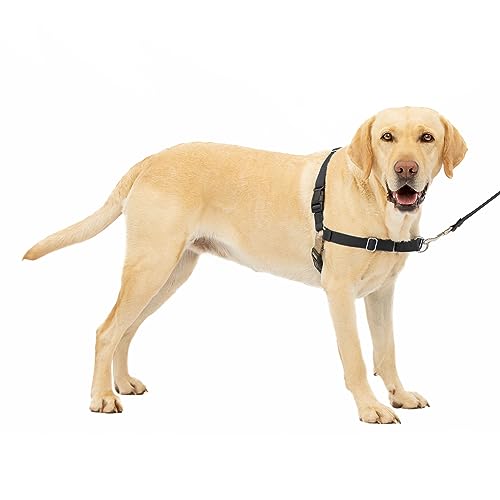
The PetSafe Easy Walk is a long-established front-clip design at the affordable end of the category. It has little padding, and some owners report chafing or shifting with heavy use.
Strong pullers: Blue-9 Balance Harness
The Blue-9 Balance offers six adjustment points and front and back attachments, which helps fit barrel-chested breeds, according to the manufacturer.
Step-in: Puppia Soft Vest
Step-in designs such as the Puppia suit small dogs and dogs that dislike things passing over their heads. They give less control than a front-clip harness.
Car travel: Kurgo Tru-Fit
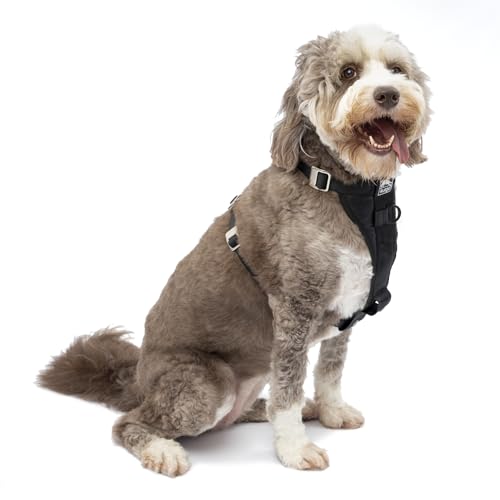
The Kurgo Tru-Fit doubles as a walking harness and a car restraint. Kurgo states it has been crash tested; crash testing of pet restraints is voluntary and methods vary between manufacturers. The Center for Pet Safety runs an independent certification programme — check whether any car harness you are considering holds that certification.
How to measure
Harness types
Common mistakes
Training still matters
A harness manages pulling; training changes it. Reward a loose leash the moment it happens, stop when the leash tightens, and keep early sessions short and low-distraction.
The bottom line
A front-clip or dual-clip harness that fits well is the right starting point for most pullers. For car travel, look for independent crash-test certification rather than a manufacturer's own claim.
Sources
Products Mentioned in This Article
📋 Affiliate Disclosure: FurReviews is reader-supported. When you buy through links on our site, we may earn an affiliate commission at no extra cost to you. This does not influence what we recommend. We compare specifications, materials and reported owner experience rather than testing products in a lab, and we say so on every page. Read our full disclosure
Frequently Asked Questions
Do no-pull harnesses actually work?
Front-clip harnesses reduce pulling by redirecting a dog sideways instead of letting them lean forward. They are a management tool — pair them with loose-leash training for a lasting change.
Front-clip or back-clip harness?
Front-clip for training and strong pullers, back-clip for well-trained dogs and casual walks. A dual-clip harness gives you both attachment points on one harness.
How do I measure my dog for a harness?
Measure chest girth around the widest part of the ribcage just behind the front legs, plus neck girth where a collar sits. Buy by chest girth and use weight only as a secondary check.
Is a harness better than a collar for walking?
For most dogs, yes. A harness spreads pressure across the chest and back rather than the throat, which matters especially for small breeds and dogs that pull.
Which harness suits a dog who hates things over their head?
A step-in harness. The dog places their front paws through two openings and the harness fastens on the back, with no need to pass anything over the face.