Exo Terra
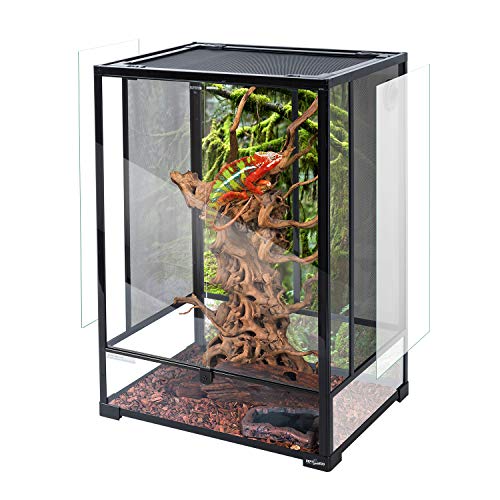
Exo Terra Glass Terrarium, 36x18x18
Front-opening glass terrarium with dual doors, screen top ventilation, and raised bottom frame. Perfect for ball pythons and bearded dragons.
View on AmazonLast updated: 2026-04-04
How we researched this: we compared the manufacturer's specifications and label claims, published guidance and reported owner experience. We have not tested this product ourselves, and nothing here is veterinary advice. Editorial policy
Strengths
- Front-opening doors
- Waterproof bottom
- Screen top ventilation
- Professional look
Drawbacks
- Heavy glass
- Screen top can sag
- Expensive for glass
Exo Terra Glass Terrarium, 36x18x18: In-Depth Research
Editorial analysis by the FurReviews team, based on manufacturer specifications, published guidance and reported owner experience. We have not tested this product ourselves.
What the 36 x 18 x 18 size is actually for
This is a 36 inch wide, 18 inch deep, 18 inch tall glass terrarium — roughly 90 x 45 x 45 cm, about 175 litres. That footprint is the standard adult enclosure size sold for bearded dragons and is a workable adult enclosure for a ball python.
Two honest qualifications before you buy it on that basis:
Match the enclosure to the species' adult size, not its size at purchase. Growing an animal through three enclosures costs more than buying the right one once.
Front-opening doors are a husbandry feature, not a convenience
This is the main reason to choose a proper terrarium over a converted fish tank. Reptiles are prey animals, and a hand descending from above reads as a bird of prey. Approaching from the side is less threatening, and animals in front-opening enclosures generally settle faster and stay calmer to handle.
The doors also make spot-cleaning and water changes something you do daily rather than something you put off.
The lock is worth using. The doors swing open on a hinge, and a determined snake pushes. An escaped snake in a house is a genuinely serious problem, both for the animal and for finding it.
The screen top: ventilation, heat, and the sag
The full screen top is what makes overhead heating and UVB possible, and it is essential for a desert species.
It is also the enclosure's known weak point, and the answer depends on what you are keeping:
The sag is real: heavy lamp fixtures sitting directly on a wide screen top will bow it over time. Support the lamp on a stand or a bar across the frame rather than resting its full weight on the mesh.
Heating, and the single most important safety point
Never run a heat source without a thermostat. Not a heat mat, not a ceramic emitter, not a basking bulb. Unregulated heat sources are the leading cause of reptile burns and deaths in home enclosures, and a thermostat costs a fraction of the enclosure.
For a bearded dragon you need a basking surface temperature and a cool end that are genuinely different, measured with a digital probe or an infrared temperature gun at the surface the animal sits on — not with a stick-on dial on the glass, which measures air at the wrong place and is close to useless.
For a ball python, belly heat from a thermostatted mat or a radiant panel, again measured at the surface.
UVB is not optional for a bearded dragon
Bearded dragons need UVB to synthesise vitamin D3 and absorb calcium. Without it they develop metabolic bone disease, which is common, preventable and often irreversible.
Use a linear tube UVB across a good share of the enclosure length rather than a small compact bulb, mount it at the manufacturer's stated distance for a screen-covered enclosure, and replace it on schedule — UVB output falls long before the tube stops emitting visible light. A tube that still lights up is not necessarily still producing UVB.
Ball pythons do not have the same requirement, though there is growing evidence that low-level UVB benefits them too.
The raised base and substrate
The bottom frame is raised, which lets an under-tank heat mat sit with an air gap rather than pressed against glass, and the base is waterproof so it holds a substrate layer without leaking.
Substrate choice is species-specific and it is worth researching properly rather than buying what is stacked next to the tanks. Loose particulate substrates carry an impaction risk for some species and setups, and calcium sand in particular is widely advised against for bearded dragons.
Weight and placement
Glass this size is heavy, and heavier again once filled. Put it on furniture actually rated for the load, level, and where it will not be knocked. Once it is full you are not moving it easily, so decide the location before you build it.
Who should look elsewhere
If you keep a humidity-dependent species, a PVC enclosure holds humidity and heat far better and is lighter. If you want the best possible bearded dragon setup rather than the common minimum, go to 48 x 24 x 24. And if the enclosure is going somewhere it may need to move, the weight of glass at this size is a genuine factor.
Exo Terra Glass Terrarium, 36x18x18: Common Questions
Is a 36x18x18 big enough for a bearded dragon?
It is the common minimum for an adult, not the ideal. A 48 x 24 x 24 gives a better thermal gradient and more room to move, and if you can fit and afford it the animal benefits. Buy for the adult size rather than the size the animal is at purchase.
Do I need a thermostat?
Yes, always, with every heat source — mat, ceramic emitter or basking bulb. Unregulated heat is the leading cause of burns and deaths in home reptile enclosures. Measure temperatures at the surface the animal sits on with a digital probe or infrared gun, not with a stick-on dial on the glass.
How do I keep humidity up with a full screen top?
Cover part of the screen. Foil, acrylic or a purpose-made cover over a portion of the top is standard practice for ball pythons and near-essential for high-humidity species. A full open screen vents humidity straight out, which is correct for a desert species and wrong for everything else.
Does the screen top block UVB?
Yes, mesh blocks a meaningful share of it. That has to be accounted for in the lamp-to-basking-spot distance, and the only way to know your actual output is a UVB meter. Replace UVB tubes on schedule too — output falls long before the tube stops producing visible light.
Glass or PVC enclosure?
Glass looks better and is what this is. PVC holds heat and humidity much better, weighs far less, and usually costs less at the same size. For humidity-dependent species PVC is the easier choice; for a desert species in a well-ventilated room, glass with a screen top is perfectly workable.
Where to Buy
As an Amazon Associate, FurReviews earns from qualifying purchases at no extra cost to you.
Similar Products You Might Like
40 Gallon
REPTI ZOO Full Glass 35 Gallon Reptile Tank
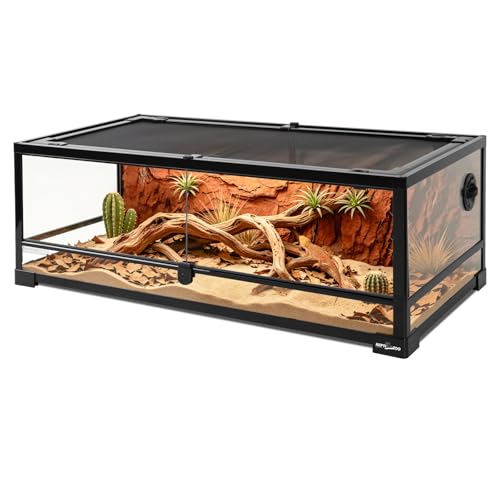
40 Gallon reptile terrariums listed for comparison. We have not yet researched this product in depth — check the full specifications on the retailer's page.

Bearded Dragon
TEICCI 20items Bearded Dragon Tank Accessories Set
Bearded Dragon reptile terrariums listed for comparison. We have not yet researched this product in depth — check the full specifications on the retailer's page.

Exo Terra
Vista 90 Panoramic Terrarium
Exo Terra reptile terrariums listed for comparison. We have not yet researched this product in depth — check the full specifications on the retailer's page.
