10 Interactive Cat Toys That Actually Keep Indoor Cats Active
How to play with an indoor cat so it satisfies the hunting sequence, and where automatic, puzzle and wand toys fit.
Affiliate Disclosure: FurReviews earns commissions from qualifying purchases. That does not affect what we recommend. Learn more

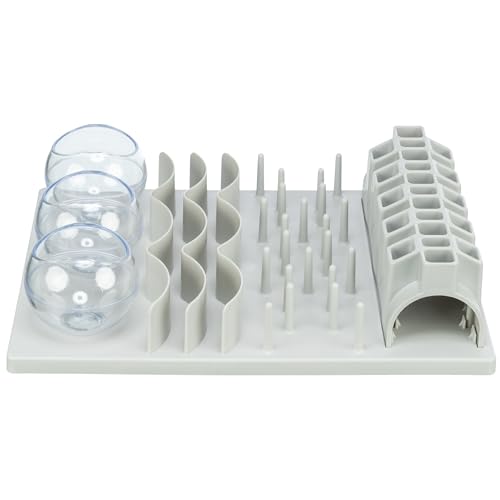
Indoor cats have everything they need except something to hunt. This guide explains what a good play session actually looks like, where automatic toys such as the PetSafe Bolt, the Cheerble Ball and the Catit Senses circuit fit, and when a cat that has stopped playing needs a vet rather than a new toy.
How this guide was put together: we compared manufacturer specifications, labels, published guidance and reported owner experience. We have not tested these products ourselves, and nothing here is veterinary advice.
Why indoor cats need this more than owners realise
A cat in the wild makes something like ten to twenty hunting attempts a day, most of them unsuccessful. That is the shape of a cat's working life: many short bursts of effort spread across the day and night.
An indoor cat with a full bowl and no outlet has none of it. The resulting under-stimulation shows up in ways owners rarely connect to boredom — overeating, over-grooming, night-time yowling, ambushing ankles, and tension between cats in the same house.
The hunting sequence is the whole point
Cats are ambush predators, and what satisfies them is a complete sequence: stalk, chase, pounce, catch, kill-bite, then eat.
Almost every toy delivers one part of it. A ball delivers chase. A laser delivers chase and then nothing at all. A wand toy in a human hand can deliver all of it — which is why it is the one cat toy genuinely worth owning.
Let the cat catch it. This is the step people skip, and it is the one that decides whether a session satisfies a cat or frustrates it. Let it win several times, and finish the session with a catch followed by food. Ending an evening session that way is the single most effective thing you can do about a cat that wakes you at four in the morning.
How to move a wand toy so a cat believes it
The instinct is to wave it in the cat's face. Prey never does that.
Cats also have individual prey preferences, largely set by what they hunted as kittens. Some track movement in the air; some want something scurrying along the floor. If your cat ignores feathers, drag something along the ground before concluding it does not play.
Where automatic toys fit
An automatic toy earns its place during the hours nobody is home. It does not replace interactive play, and a toy that can never be caught can frustrate rather than satisfy — so pair it with the daily wand session.
Two practical notes: a wake-on-touch mode mimics prey far better than a toy that patrols continuously, and a hard toy on a hard floor is loud enough to be turned off at night.
The laser caveat
Lasers are popular because they are effortless, and they carry a specific problem: the cat can never catch the dot. For some cats that produces genuine frustration, and there is discussion in veterinary behaviour about an association with compulsive behaviours in predisposed cats.
If you use one, always finish by landing the dot on a physical toy or a treat the cat can actually get its paws on. And never shine a laser near any animal's or person's eyes.
Rotation and food puzzles
Cats habituate very quickly. The single most effective free technique is rotation: keep most toys in a drawer and swap two or three out every few days. A toy that has been away for a week is new again.
Food puzzles do something a toy cannot — they give back the activity a bowl removes. Scattering part of the daily kibble across a room, a cardboard egg box with kibble in the cups, or a plastic bottle with holes in it all work, cost nothing, and engage the nose.
Catnip, and what to try when it does nothing
Roughly a third of cats do not respond to catnip at all. The trait is inherited, and kittens under about six months usually do not respond even if they will as adults.
Silvervine works on many catnip non-responders and is the best thing to try next, followed by valerian root. Between the three, the great majority of cats respond to something.
Scratching: the other daily need
Scratching belongs in the same daily routine as play, and a bored indoor cat often takes it out on the furniture. Scratching sheds the outer sheath of the claw, stretches the back and shoulders, and leaves scent from glands in the paws. It is a need, so redirecting it works and punishing it does not.
Match the angle your cat already uses. Sofa arms and door frames mean vertical posts; carpet and rugs mean horizontal pads or flat cardboard scratchers; stair edges and the side of the bed mean angled scratchers. Many cats use two types, which is why a cat tree with only vertical posts can be ignored. Vertical posts need to be tall enough for a full stretch and heavy enough not to wobble, or the cat gives up on them.
Other materials. Corrugated cardboard is what many cats prefer above everything else, and it is cheap, but it makes a mess and wears out fast; reversible pads double its life. Natural wood or bare log posts suit cats who scratch trees outdoors and shed no fibres.
Placement matters more than the post:
Redirecting a cat who already scratches furniture. Make the furniture unattractive (double-sided sticky strips, a smooth protector panel, or a loose throw) and make the post irresistible (place it alongside, add a little catnip or silver vine, end wand-toy play at the post, reward use). Never shout or spray water; it teaches the cat to scratch when you are out and adds stress. Trim claws every two to three weeks while you retrain. Declawing is an amputation of the last bone of each toe, is banned in many countries, and is never the answer to a scratching problem.
Replace a post when the rope has unwound to bare board or the cardboard is compressed flat, not because it looks messy; cats prefer a well-used surface.
Safety
Put wand toys away between sessions. String, ribbon, elastic and feathers become linear foreign bodies if swallowed, and a linear foreign body in a cat's intestine is a serious surgical emergency — the string saws through the bowel wall as the gut tries to move it.
When a cat stops playing
Rule out pain first. A cat that has stopped playing, stopped jumping to a favourite spot, or become less active is often telling you about arthritis or illness rather than boredom. That is a vet visit, and it is very commonly missed in older cats.
Sources
Products Mentioned in This Article



📋 Affiliate Disclosure: FurReviews is reader-supported. When you buy through links on our site, we may earn an affiliate commission at no extra cost to you. This does not influence what we recommend. We compare specifications, materials and reported owner experience rather than testing products in a lab, and we say so on every page. Read our full disclosure
Frequently Asked Questions
How much play does an indoor cat need?
Ten to fifteen minutes of interactive wand play once or twice a day, done properly, does more than any automatic toy. A wild cat makes ten to twenty hunting attempts a day, and an indoor cat with a full bowl and no outlet has none of that — which shows up as overeating, over-grooming and night-time yowling.
How do I use a wand toy properly?
Move it away from the cat, not at it, and let it hide behind furniture before twitching a tip into view. Vary speed the way prey does. Crucially, let the cat catch it several times, and end the session with a catch followed by food — that completes the hunting sequence and settles the cat.
Are laser pointers bad for cats?
The problem is that the cat can never catch the dot, which leaves the hunt incomplete. For some cats that causes real frustration, and there is discussion in veterinary behaviour about an association with compulsive behaviours in predisposed cats. Always finish by landing the dot on a physical toy or treat.
My cat ignores catnip. What else works?
Silvervine, which works on many catnip non-responders and is the best thing to try next, then valerian root. Roughly a third of cats do not respond to catnip at all — the trait is inherited — and kittens under about six months usually do not respond either.
Why has my cat lost interest in playing?
Rule out pain before boredom. A cat that has stopped playing, stopped jumping to a favourite spot or become less active is often telling you about arthritis or illness, which is very commonly missed in older cats. If health is fine, rotate toys — cats habituate very fast and a toy put away for a week is new again.
Where should I put a scratching post?
Directly beside the furniture your cat is damaging, plus one near their sleeping spot and one at a doorway. Move it gradually only after weeks of consistent use.
How do I stop my cat scratching the sofa?
Make the sofa less appealing with sticky strips or a loose throw, place a tall, heavy sisal post right next to it, reward use, and keep claws trimmed. Never punish scratching.

