Trixie
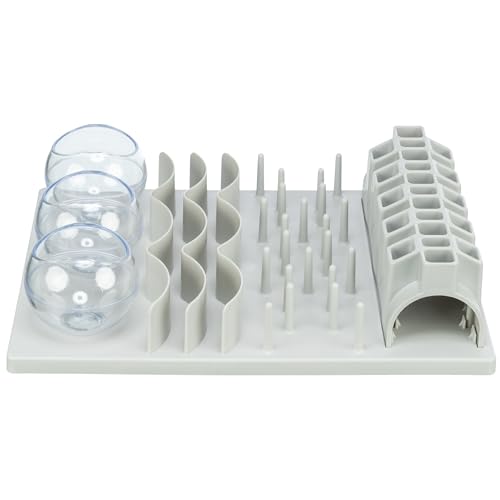
Trixie 5-in-1 Activity Center for Cats
5-in-1 puzzle board with different modules to challenge cats mentally. Place treats in puzzles to encourage problem solving.
View on AmazonLast updated: 2026-03-20
How we researched this: we compared the manufacturer's specifications and label claims, published guidance and reported owner experience. We have not tested this product ourselves, and nothing here is veterinary advice. Editorial policy
Strengths
- 5 different challenges
- Mental stimulation
- Slows down eating
- Easy to clean
Drawbacks
- Some cats give up quickly
- Lightweight can slide
- Treats fall out easily
Trixie 5-in-1 Activity Center for Cats: In-Depth Research
Editorial analysis by the FurReviews team, based on manufacturer specifications, published guidance and reported owner experience. We have not tested this product ourselves.
Why puzzle feeding matters more for indoor cats than for dogs
A cat in the wild makes something like ten to twenty hunting attempts a day, most of them unsuccessful. That is the shape of a cat's working life: many short bursts of effort, spread across the day and night, most producing nothing.
A bowl of food put down twice a day removes all of it. The cat's calorie needs are met in ninety seconds and the remaining twenty-three hours have nothing in them.
That is the argument for puzzle feeding, and it is stronger for indoor cats than for most dogs. Cats given food puzzles have been reported to show reductions in a range of stress-related problems — over-grooming, aggression towards housemates, attention-seeking at night and overeating — because the behaviour they were built for has somewhere to go.
Start much easier than you think
Cats give up faster than dogs and they do not persevere when confused. A puzzle introduced at full difficulty is a puzzle the cat walks away from permanently.
If the cat loses interest, you went too fast. Go back a step.
Puzzle types, and why variety matters
The five-module design is doing something useful: different mechanisms use different actions.
Cats often love one mechanism and ignore another, and that is normal. A multi-module board lets you find which one your cat likes rather than buying four separate puzzles.
Wet food, dry food and cleaning
Dry food or treats are far easier in a puzzle board. Wet food works in the shallow wells of some designs and makes cleaning a great deal more involved.
Wash it after any wet food and at least weekly with dry. Residue in plastic crevices goes rancid and grows bacteria, and a cat will keep eating from a sour puzzle.
Check whether the board is dishwasher safe, and if so whether it is top-rack only — hot cycles warp thin plastic.
Non-slip matters
A board that slides across a hard floor is one a cat chases rather than solves. Put it on a mat, in a corner, or on a rug. Some designs have rubber feet, and if yours does not, self-adhesive furniture pads solve it.
Multi-cat households
Feed each cat separately when puzzle feeding. A puzzle takes longer than a bowl, and a slow cat working next to a fast one loses its food and learns that puzzles are a bad idea.
If one cat guards the board, that is a resource competition problem, and the answer is more boards in more places rather than fewer.
Free alternatives that work just as well
Rotation matters more than any one product, and these cost nothing:
Rotating between three or four of these plus a bought board keeps a cat far more engaged than one puzzle used daily.
A note on cats that will not engage
Who should look elsewhere
If your cat chews plastic, use fabric or cardboard alternatives. If you have several cats, plan for separate feeding and more than one board. And if your cat has stopped engaging with things it used to enjoy, see a vet before buying another toy.
Trixie 5-in-1 Activity Center for Cats: Common Questions
Do cat puzzle feeders actually help?
They give indoor cats back a behaviour that a food bowl removes entirely — a wild cat makes ten to twenty hunting attempts a day, most unsuccessful. Food puzzles have been reported to reduce over-grooming, aggression towards housemates, night attention-seeking and overeating, because that effort has somewhere to go.
My cat ignored the puzzle. What did I do wrong?
Started too hard. Cats give up far faster than dogs. Begin with food visible and freely reachable — lids off, treats on top — so the cat wins instantly, then increase difficulty over weeks rather than days. If interest drops, go back a step.
Should I use wet or dry food in a puzzle feeder?
Dry food or treats are far easier and much easier to clean. Wet food works in the shallow wells of some designs and makes cleaning considerably more involved. Wash after any wet food and at least weekly with dry — residue in plastic crevices goes rancid and cats will still eat from it.
The board slides across the floor. How do I fix it?
Put it on a mat, a rug or in a corner, or stick self-adhesive furniture pads underneath if it has no rubber feet. A puzzle the cat chases rather than solves is a puzzle the cat gives up on.
Are there free alternatives to a puzzle feeder?
Several that work well. Scatter part of the daily kibble across a room or up a cat tree. Use a cardboard egg box with kibble in the cups, a toilet roll tube with the ends folded in, or a plastic bottle with holes cut in it and the cap and ring removed. Rotating several beats one puzzle used daily.
Where to Buy
As an Amazon Associate, FurReviews earns from qualifying purchases at no extra cost to you.
Similar Products You Might Like

PetSafe
PetSafe Bolt Interactive Laser Cat Toy
Automatic laser toy that moves in random patterns to keep cats engaged. 15-minute auto shut-off timer.
+ Automatic random patterns
+ Hands-free play
- Batteries not included
- Laser can hit eyes if placed wrong

Cheerble
Cheerble Smart Interactive Cat Ball
Self-rolling smart ball with 3 interaction modes. Built-in obstacle avoidance keeps it from getting stuck.
+ Self-rolling
+ 3 play modes
- Noisy on hard floors
- Small for large cats

Catit
Catit Senses 2.0 Super Circuit
Customizable ball track system with peek-a-boo openings that trigger hunting instincts. Expandable design.
+ Customizable layout
+ Stimulates hunting instinct
- Ball can get lost
- Takes up floor space