Dog Car Safety 2026: Crash-Tested Harnesses, Crates & Barriers
What crash-tested actually means for dog car restraints, how harnesses, crates and barriers compare, and how to fit each one correctly.
Affiliate Disclosure: FurReviews earns commissions from qualifying purchases. That does not affect what we recommend. Learn more

An unrestrained 30lb dog in a 30mph stop carries the momentum of a small motorbike. That is the reason to restrain a dog in a car, and it applies to short trips as much as road trips. The secondary reasons matter too: a loose dog distracts the driver, blocks airbag deployment on a lap, and bolts out of a damaged door into traffic after a collision.
The three legitimate options
Crash-tested harness plus seatbelt tether. The dog wears a purpose-built travel harness with a broad, padded chest plate and reinforced webbing, tethered by a short strap into the seatbelt buckle or top tether anchor. Best balance of safety, convenience and space, and the only option that doubles as a walking harness for some models.
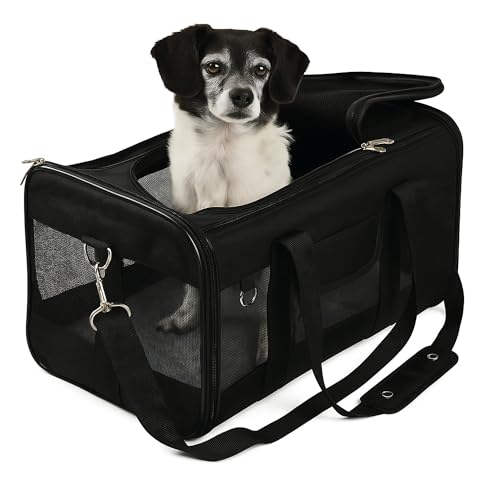
Travel crate secured to the vehicle. A rigid crate, strapped down so it cannot become a projectile, is the strongest protection available for dogs that tolerate crates. It also contains an injured or panicked dog after a crash, which is why working-dog handlers prefer it.
Cargo barrier. A rigid barrier between boot and cabin protects the humans and stops the dog reaching the driver, but it does not restrain the dog within the boot. Use a barrier plus a crate or tether, not a barrier alone.
What crash-tested actually means
There is no universal legal standard for pet restraints in most markets, so the phrase is doing a lot of unregulated work on packaging. Look for specific, verifiable claims: a named independent testing organisation, the dog weight tested, the impact speed, and a pass at a stated crash-test protocol. "Crash-tested" with no numbers is marketing. Reputable makers publish the test video and the weight class.
Match the test weight to your dog. A harness certified for dogs up to 75lb is not certified for your 95lb rottweiler.
Why zipline and stretchy tethers fail
Long tethers and elasticated bungee leads sold as car restraints let the dog build up travel before the strap stops them, which converts a survivable deceleration into a whiplash injury. A collar attachment is worse — it concentrates the entire force on the neck and can be fatal. Rules: attach to a harness, never a collar; keep the tether short enough that the dog cannot reach the front seats or fall off the seat; no elastic.
Fitting a travel harness correctly
Crate specifics
A travel crate needs to be strapped through its own anchor points to the vehicle's cargo tie-downs or seat rails. An unsecured crate is a heavy projectile with a dog inside. Choose a crate the dog can stand, turn and lie down in — no larger, because excess space allows the dog to be thrown around inside. Aluminium and reinforced-plastic travel crates are considerably stronger than wire crates, which collapse under impact.
Comfort, and car sickness
Safety measures fail when the dog fights them, so build a positive association: harness on in the driveway, treat, harness off. Then engine on, treat. Then a one-minute drive to somewhere good. Rushing this teaches the dog that the harness predicts a long unpleasant journey.
For motion sickness, keep the dog facing forward, crack a window for airflow, skip the meal immediately before travel (but not water), and ask your vet about anti-nausea medication for dogs that drool and vomit on every trip — it is a treatable problem, not something the dog needs to grow out of.
Never leave a dog in a parked car in warm weather. Interior temperature climbs fast even in shade with windows cracked, and heatstroke can develop within minutes.
What to keep in the car
A spare slip lead in the glovebox, water and a collapsible bowl, and a copy of your dog's microchip number and vet details. If your dog escapes at a roadside after an incident, the slip lead is what gets them back.
Our editorial take
For most dogs and most cars: a crash-tested harness with a published test weight, worn on the back seat with a short non-elastic tether. Choose a strapped-down rigid travel crate instead if your dog already loves a crate or you drive an estate or SUV — it is the strongest option available. Add a cargo barrier as a supplement, never as the only restraint.
Products Mentioned in This Article


📋 Affiliate Disclosure: FurReviews is reader-supported. When you buy through links on our site, we may earn an affiliate commission at no extra cost to you. This does not influence what we recommend. We compare specifications, materials and reported owner experience rather than testing products in a lab, and we say so on every page. Read our full disclosure
Frequently Asked Questions
Are dog seat belts actually safe?
A purpose-built travel harness with a broad chest plate, a short non-elastic tether and a published crash-test weight class is safe. Collar attachments and stretchy ziplines are not.
Crate or harness for car travel?
A rigid crate strapped to the vehicle offers the most protection and contains an injured dog. A harness is easier day to day and works in any seat.
Can my dog ride in the front seat?
No. Passenger airbags deploy with enough force to seriously injure a dog. Restrain dogs on the back seat or in the cargo area.

