
Kaytee
Kaytee Silent Spinner Exercise Wheel
Quiet wheel with a solid running surface. The 6.5-inch Regular suits dwarf hamsters only; Syrians need 11 inches or more.
View on AmazonLast updated: 2026-03-15
How we researched this: we compared the manufacturer's specifications and label claims, published guidance and reported owner experience. We have not tested this product ourselves, and nothing here is veterinary advice. Editorial policy
Strengths
- Very quiet operation
- Solid running surface
- Ball-bearing axle
- Multiple sizes
Drawbacks
- Can wobble over time
- Plastic feels cheap
- Suction cups don't hold
Kaytee Silent Spinner Exercise Wheel: In-Depth Research
Editorial analysis by the FurReviews team, based on manufacturer specifications, published guidance and reported owner experience. We have not tested this product ourselves.
Why wheel choice is a welfare decision, not an accessory
A hamster in the wild covers several kilometres a night. A hamster in a cage covers that distance on a wheel or does not cover it at all, which is why a wheel is the one item in a small-pet cage that is genuinely non-negotiable. It is also the item most often bought wrong, because the two things that matter — surface and diameter — are not the things pet-shop shelves emphasise.
The Kaytee Silent Spinner gets the first one right and makes you choose carefully on the second.
Solid surface: the part that matters most
Wire-rung wheels and mesh wheels cause a specific, avoidable injury called bumblefoot, and they catch feet and tails. The Silent Spinner has a solid plastic running surface with no gaps, which removes that risk entirely. Any wheel you consider should be solid — if it is not, the price does not matter.
The trade-off of a solid plastic surface is grip. Some animals scrabble on bare plastic, particularly if their feet are damp from a recent cage clean. A thin strip of masking tape across the running surface, or simply letting the wheel develop a slightly matte surface with use, solves it.
Diameter is the number people get wrong
An animal whose back arches upward while running is on a wheel that is too small, and a permanently arched spine is a genuine health problem rather than an aesthetic one. The Silent Spinner comes in several sizes and the size on the shelf is very often too small for the animal buying it.
| Animal | Minimum sensible diameter |
|---|---|
| Dwarf hamster | About 20 cm / 8 inches |
| Syrian hamster | About 28 cm / 11 inches, larger is better |
| Gerbil | About 20 cm / 8 inches |
| Mouse | About 15 cm / 6 inches |
| Rat | 28 cm / 11 inches and up, and most wheels of this type are too small |
If you have a Syrian hamster, assume you need the largest version and check the measurement rather than the label. This is the single most common mistake with any wheel, this one included.
Does it actually run silently?
New, correctly assembled and stand-mounted, it is genuinely quiet — the ball-bearing axle is the reason, and it is a real improvement on a plain plastic post. The honest caveat is that "silent" is a description of a new wheel, not a permanent property.
Three things reintroduce noise:
Mounting it on the cage bars rather than on the stand solves most of the wobble, if your cage has bars to mount to. In a tank or bin cage, weight the stand down with a flat stone or press it into a firmer patch of bedding rather than the fluffiest corner.
The suction cups
Some versions ship with suction cups intended to attach the wheel to a smooth tank wall. In practice they let go, usually at night, usually loudly. Treat them as a bonus that may not work rather than the mounting plan, and prefer bar-mounting or the stand.
Who should look elsewhere
If you keep a large Syrian and want a wheel that will outlast the animal, a metal-hubbed or wooden wheel of 30 cm or more is a better long-term buy. If your cage is a glass tank with no bars, look for a wheel with a genuinely heavy weighted base rather than relying on suction. And if silence is the absolute priority, check the axle monthly — no wheel stays quiet while packed with bedding.
Kaytee Silent Spinner Exercise Wheel: Common Questions
What size Silent Spinner do I need for a Syrian hamster?
The largest one you can fit, and at least about 28 cm (11 inches). A Syrian on an 8-inch wheel runs with an arched back, which is a long-term spine problem. Measure rather than trusting the packaging category.
Is it really silent?
It is genuinely quiet when new and clean — the ball-bearing axle does the work. Noise returns when bedding and hair pack into the axle, or when the free-standing base rocks on deep bedding. Cleaning the axle at cage-clean time restores most of it.
Is a solid wheel better than a wire one?
Yes, and it is not a close call. Wire rungs and mesh catch feet and tails and are associated with sore, damaged foot pads. Any wheel you buy should have a continuous solid running surface.
My hamster slips on the plastic surface. What can I do?
A strip of masking tape across the running surface gives grip without adding anything the animal can chew loose in quantity. A wheel that has been used for a while also develops a less glossy surface naturally.
Can I use it for a rat?
Most sizes in this range are too small for an adult rat. Rats need 28 cm and realistically more, and a wheel built for their weight. Look at wheels sold specifically for rats instead.
Where to Buy
As an Amazon Associate, FurReviews earns from qualifying purchases at no extra cost to you.
Similar Products You Might Like
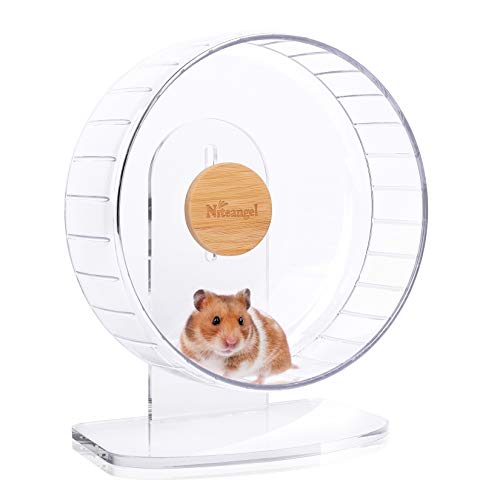
Niteangel
Niteangel Super Silent Hamster Exercise Wheel
Exercise wheel with dual ball bearings, marketed as quiet. Solid running surface with no rungs to catch feet. Multiple sizes available.
+ Marketed as quiet
+ Solid running surface
- Pricey for a wheel
- Assembly required

Ferret Tunnel
3 Packs Pet Fun Tunnels
Ferret Tunnel small pet toys listed for comparison. We have not yet researched this product in depth — check the full specifications on the retailer's page.

Guinea Pig
Guinea Pig Hideout Tunnel
Guinea Pig small pet toys listed for comparison. We have not yet researched this product in depth — check the full specifications on the retailer's page.
