
FURminator
FURminator Undercoat Deshedding Tool for Cats
The manufacturer claims up to 90% less shedding for cats. Stainless steel edge reaches through topcoat without damaging skin.
View on AmazonLast updated: 2026-03-22
How we researched this: we compared the manufacturer's specifications and label claims, published guidance and reported owner experience. We have not tested this product ourselves, and nothing here is veterinary advice. Editorial policy
Strengths
- Maker claims up to 90% less shedding
- Skin guard for safety
- Ergonomic handle
- Works on all coat types
Drawbacks
- Expensive brush
- Can pull if not careful
- Not for matted fur
FURminator Undercoat Deshedding Tool for Cats: In-Depth Research
Editorial analysis by the FurReviews team, based on manufacturer specifications, published guidance and reported owner experience. We have not tested this product ourselves.
Why cats need this more than you would think
Cats groom themselves constantly and swallow most of the hair they remove. That hair either passes through the gut or comes back up as a hairball. A tool that takes loose undercoat out before the cat swallows it reduces hairballs at the source, which no food does as directly.
For long-haired cats it does something more important: it prevents mats. A matted long-haired cat is a painful animal — mats pull on skin, trap moisture and hide sores — and the endpoint is a sedated shave at the vet. Regular undercoat removal is the prevention.
Cats are not small dogs about this
Cat skin is thinner and more mobile than dog skin, and cats tolerate grooming for far less time. Two rules follow:
Stop while the cat is still happy. The single biggest predictor of whether you can groom a cat in six months is whether the cat enjoyed it today.
Which cats suit it, and which do not
Suits: cats with a dense undercoat — Maine Coons, Norwegian Forest Cats, Siberians, British Shorthairs, Ragdolls, and most ordinary domestic shorthairs and longhairs that shed in volume.
Does not suit:
Elderly cats deserve extra care
An older cat that has suddenly developed mats or a greasy, unkempt coat is usually telling you something. Arthritis makes turning to groom the lower back and hips painful, and hyperthyroidism and dental pain also show up as a decline in grooming.
A cat whose coat condition has changed should be seen by a vet, not just brushed more. Grooming the cat is the right supportive care, and it is not the answer on its own.
Technique
Once or twice a week suits most cats. Daily during a heavy shed for a long-haired cat, but in short sessions.
Making it something the cat tolerates
Pair grooming with something good, keep it short, and do it when the cat is already relaxed rather than when you have decided it needs doing. Groom in the place the cat already likes being stroked. If the cat leaves, let it — chasing a cat to groom it ends grooming permanently.
A cat that genuinely cannot be groomed at home and is developing mats needs a professional groomer or a vet visit, and that is not a failure on your part.
Who should look elsewhere
If your cat is hairless, rex-coated or very fine-coated, this is the wrong tool. If your cat is matted, deal with the mats properly first — carefully, or with a groomer. And if your cat simply will not tolerate a metal blade, a soft rubber grooming mitt removes a surprising amount of loose hair and most cats accept it as stroking.
FURminator Undercoat Deshedding Tool for Cats: Common Questions
How often should I groom my cat with a deshedding tool?
Once or twice a week for most cats, and daily in short sessions for a long-haired cat during a heavy shed. Keep sessions to five or ten minutes and stop while the cat is still enjoying it — that is what makes the next session possible.
Can I use it on a matted cat?
No. Dragging a blade into a mat pulls on skin, and cat skin tears more easily than dog skin. Mats need careful work with a comb and mat splitter, blunt-nosed scissors used very carefully, or a groomer or vet. Never cut flat against a cat's skin — it tents into the blades far more easily than you expect.
Will it stop hairballs?
It helps at the source, which food cannot do as directly: hair removed by the tool is hair the cat does not swallow. It will not eliminate hairballs. And frequent vomiting is not normal in cats — a cat vomiting weekly should see a vet rather than being assumed to have hairballs.
Which cats should not be groomed with one?
Hairless cats, rex-coated cats like Devon and Cornish Rex whose delicate curly coat is easily damaged, and cats with very fine single coats and no real undercoat, where the blade thins rather than deshedding.
My old cat's coat has gone greasy and matted. Why?
Usually because grooming has become painful or difficult. Arthritis makes turning to reach the lower back and hips hard, and hyperthyroidism and dental pain also show up as a decline in self-grooming. A change in coat condition in an older cat is a reason to see a vet, not just to brush more.
Where to Buy
As an Amazon Associate, FurReviews earns from qualifying purchases at no extra cost to you.
Similar Products You Might Like

Burts Bees
PetO’Cera All-in-One Cat Shampoo and Conditioner
Burts Bees cat grooming listed for comparison. We have not yet researched this product in depth — check the full specifications on the retailer's page.
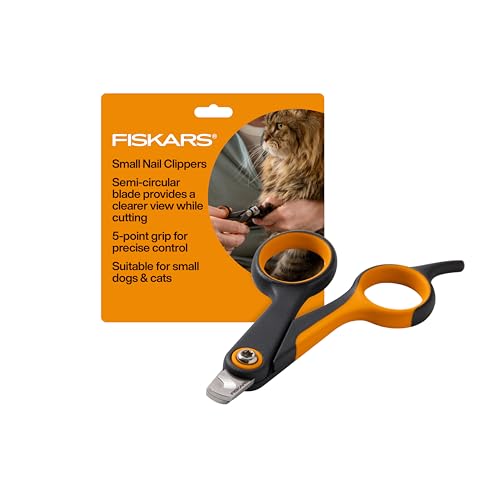
Cat Nail
Fiskars Pet Small Pet Nail Clippers
Cat Nail cat grooming listed for comparison. We have not yet researched this product in depth — check the full specifications on the retailer's page.

Furminator Cat
Dog & Cat Deshedding Brush
Furminator Cat cat grooming listed for comparison. We have not yet researched this product in depth — check the full specifications on the retailer's page.
