Best Hamster Cages 2026: Bin Cage vs Glass Tank vs Wire Cage
Which hamster cage type is best? We compare bin cages, glass tanks, and wire cages with minimum size requirements.
Affiliate Disclosure: FurReviews earns commissions from qualifying purchases. That does not affect what we recommend. Learn more

How we chose
- Unbroken floor area against the minimums published by welfare organisations, measured as one continuous space rather than added-up levels.
- Bedding depth the enclosure can hold, since hamsters burrow and shallow bases prevent it.
- Ventilation and bar spacing for the species — dwarf hamsters need narrower spacing than Syrians.
- How easy the enclosure is to clean and to fit a correctly sized wheel into.
Not judged: Durability over years of use, and how any individual hamster takes to a given setup.
Researched from labels, specifications and published guidance — we did not test these products. Editorial policy
Is a hamster cage worth buying in 2026? Only if it gives at least about 775 square inches (100 × 50 cm) of unbroken floor and holds 6 inches or more of bedding. Most tube-style pet-store cages offer 150–360 square inches, so for most owners the better buy is a large DIY bin cage, a 40-gallon breeder tank with a mesh lid, or one of the few wire cages big enough, such as the Living World Deluxe Habitat XL. This guide compares the three on the numbers that decide it.
How this guide was put together: we compared manufacturer specifications, labels, published welfare guidance and reported owner experience. We have not tested these products ourselves, and nothing here is veterinary advice. As an Amazon Associate we earn from qualifying purchases; that does not change which cage type we recommend.
Hamster cage types compared
| Cage type | Typical unbroken floor | Bedding depth it can hold | Ventilation | Main drawback |
|---|---|---|---|---|
| DIY bin cage (100–110 qt) | about 600–750 sq in, depending on the bin | 6–8 in or more | Only as good as the mesh panels you cut in | DIY work; side views are limited |
| 40-gallon breeder tank (36 × 18 in) | 648 sq in | 6–8 in or more | Needs a mesh screen lid, never glass | Heavy (50+ lb empty) and costly outside sales |
| Large wire cage (e.g. Living World Deluxe Habitat XL) | about 1,070 sq in (46.9 × 22.8 in) | 3–4 in in the plastic base | Best of the three | Bedding depth and bar chewing |
| Tube or "starter" cage (e.g. Kaytee CritterTrail) | about 150–360 sq in | 1–2 in | Fair | Far below every welfare minimum |
The bin figure is an estimate: measure the inside of the base, not the lid, because most storage bins taper toward the bottom.
Minimum Cage Size: The Science
The German veterinary animal-welfare association TVT (Tierärztliche Vereinigung für Tierschutz) recommends a minimum of 100 × 50 cm — about 775 square inches — of unbroken floor space, and it is the figure most welfare groups now cite. For context, most pet store cages provide 150-300 sq in — less than half the minimum.
Why size matters: bar chewing and repetitive pacing or climbing are widely described in welfare guidance as signs that an enclosure is too small or too barren.
Option 1: Bin Cages — Best Value
A bin cage is a large plastic storage bin (100+ quart) modified with ventilation holes or mesh panels. It is a common recommendation from small-animal rescues because it is the cheapest way to get a large floor area.
How to build one:
Pros: Largest floor space for the money (700+ sq in), deep bedding possible (6-8 inches), chew-proof, escape-proof, lightweight, easy to clean
Cons: Not as attractive as glass, limited visibility from the sides, DIY required, can retain humidity in poorly ventilated designs
Option 2: Glass Aquariums — Best Visibility
A 40-gallon breeder aquarium (36x18") provides 648 sq in of floor space and excellent visibility. It's the most aesthetically pleasing option and allows for impressive naturalistic setups.
Best tank: Aqueon 40-Gallon Breeder
Watch for dollar-per-gallon sales, which are by far the cheapest way to buy one. The 36x18" footprint meets minimum requirements, and the height allows 6+ inches of bedding.
Pros: Excellent visibility, holds deep bedding without spilling, no bar chewing, looks great, readily available
Cons: Heavy (50+ lbs empty), expensive without sales, poor ventilation (use mesh lid, never glass), hard to clean without lifting
Ventilation: This is the critical issue with glass tanks. You MUST use a mesh screen lid — never a glass or plastic lid. Urine breaks down into ammonia, and a poorly ventilated enclosure lets it build up.
Option 3: Wire Cages — Most Convenient
Wire cages offer the best ventilation and easiest access for handling. However, finding one that meets minimum size requirements is challenging and expensive.
Our Pick: Kaytee CritterTrail (NOT recommended) vs Living World Deluxe Habitat XL
The Kaytee CritterTrail is one of the most widely sold hamster cages — and we can't recommend it as a main enclosure. At 360 sq in, it provides less than half the minimum floor space.
The Living World Deluxe Habitat XL (46.9x22.8") provides 1,069 sq in — well above the minimum. The balcony design adds extra usable space, and the wire top allows excellent ventilation while the plastic bottom holds 3-4 inches of bedding.
Pros: Best ventilation, easy access from top and front, hanging accessories possible, looks neat
Cons: Bar spacing must be 1/2" or less (Syrian) or 1/4" (dwarf), bar chewing is possible, limited bedding depth, more expensive per sq in
Essential Accessories
Regardless of cage type, every hamster needs:
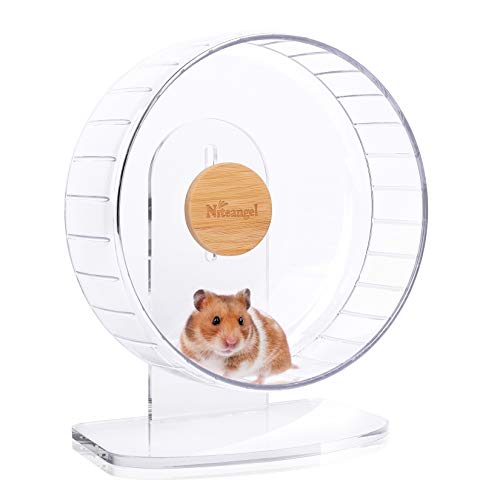
Wheel: The most important accessory. Must be solid-surfaced (never wire/mesh — causes bumblefoot). Minimum diameter: 8" for dwarfs, 10-12" for Syrians. Niteangel wheels are marketed as near-silent, come in the larger diameters Syrians need, and have a solid running surface.
Bedding: Paper-based bedding (Kaytee Clean & Cozy) at 6-8 inches deep minimum. Hamsters are burrowing animals, and deep bedding lets them dig. Avoid cedar and untreated pine shavings, whose aromatic oils are commonly advised against for small animals.
Hideout: At minimum one enclosed hide for sleeping. Multi-chamber hides mimic natural burrows and reduce stress.
Sand Bath: Chinchilla sand (not dust) in a shallow dish for coat maintenance. Essential for dwarf hamsters, beneficial for Syrians.
Chew Toys: Apple wood sticks, whimzees, or untreated wooden toys. Hamster teeth never stop growing — chewing keeps them filed.
Common Cage Mistakes
Budget Breakdown
Budget Setup (Bin Cage):
Mid-Range (Glass Tank):
Premium (Large Wire Cage):
The Bottom Line
For most hamster owners, a bin cage offers the best value — maximum space for minimum cost. Glass tanks provide the best viewing experience. Wire cages are the most convenient but expensive for adequate sizing. Whatever you choose, prioritize floor space above all else. A happy hamster is an active, curious hamster — and that requires room to explore.
Sources
Products Mentioned in This Article

📋 Affiliate Disclosure: FurReviews is reader-supported. When you buy through links on our site, we may earn an affiliate commission at no extra cost to you. This does not influence what we recommend. We compare specifications, materials and reported owner experience rather than testing products in a lab, and we say so on every page. Read our full disclosure
Frequently Asked Questions
Is an expensive hamster cage worth it?
Only if the money buys floor space. A cage is worth its price when it gives at least about 775 square inches of unbroken floor and room for 6 inches of bedding. Levels, tubes and colours add cost without adding usable space, and a large plastic storage bin meets the floor minimum for far less.
What is the minimum cage size for a hamster?
The German veterinary welfare association TVT recommends at least 100 × 50 cm (about 775 square inches) of unbroken floor, and most welfare groups now cite that figure. Measure the base as one continuous area; platforms and tubes do not count toward it.
Bin cage or glass tank?
A bin cage gives the most floor for the money and is light to move. A 40-gallon breeder tank looks better and holds deep bedding, but weighs over 50 lb empty and must have a mesh lid for ventilation. Both beat almost every boxed cage on space.
What bar spacing does a hamster cage need?
No more than about 1/2 inch (1.27 cm) for a Syrian and about 1/4 inch (0.6 cm) for dwarf species. Wider spacing lets a hamster squeeze through or get its head stuck.
What size wheel goes with the cage?
A solid-surface wheel of at least 8 inches for dwarf hamsters and 10–12 inches for Syrians. If the hamster's back arches while it runs, the wheel is too small. Check that the cage is tall enough for the wheel before you buy either.